Blog

  • Enhancing Production Efficiency and Consistency through Automated Robot Rivet Welding

    The Rivet Welding Revolution Amidst the Tide of Automation
    As the global manufacturing sector transitions towards Industry 4.0 and China's 'Made in China 2025' initiative, rivet welding – traditionally reliant on human skill – now finds itself at the very heart of an automation revolution. Robotic automated rivet welding systems are reshaping production structures across diverse industries, from automotive manufacturing to heavy equipment, through their exceptional repeatability, stable quality output, and remarkable production efficiency. This paper delves deeply into the core advantages, technical architecture, implementation process, and future prospects of robotic automated rivet welding, elucidating how this technology serves as a pivotal engine for enhancing corporate competitiveness.

    Part One: Robotic Riveting Automationsolubleits groundbreaking advantage
    Exponential improvement in production efficiency

    Continuous operation capability: The robot can operate continuously for 24 hours without fatigue issues, enhancing overall equipment effectiveness (OEE) by 30%-50%.

    High welding speed and multi-pass welding coordination: Robotic operating speeds far exceed manual capabilities, whilst multi-robot workstations enable simultaneous welding at different workpiece locations, thereby reducing cycle times. For instance, in the welding of construction machinery arms, multi-robot coordination can shorten production cycles from days to hours.

    Fundamental assurance of welding quality and consistency
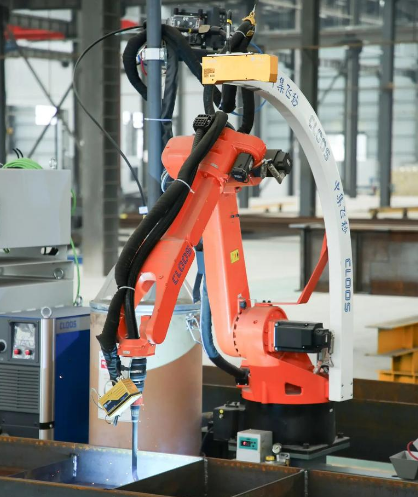
    Precise Reproduction of Parameters: The current, voltage, speed, angle and other parameters for each weld bead are strictly guaranteed by the programme, completely eliminating human variation.

    Flawless execution of intricate paths: The robot's six-axis coordination capability achieves millimetre-level precision in perfectly following complex trajectories such as spatial curves and saddle welds. This represents an area where even skilled welders struggle to achieve consistent results.

    Substantial reduction in overall costs

    Direct labour costs: Significantly reducing reliance on highly skilled welders alleviates the challenges of staffing difficulties and escalating labour costs.

    Hidden cost reductions: Lowering defective product rates (typically achievable reductions exceeding 60%), Reducing material wastage (through precise control of welding material filler quantities), Saving on training costs.

    Improvements to the working environment and safety

    Freeing workers from harsh environments involving high temperatures, smoke, dust and intense light, transitioning them to programming, monitoring and maintenance duties.

    Reduce occupational accident risks and comply with increasingly stringent occupational health and safety regulations.

    Part Two: Core Technology Components of Robotic Automation Systems
    Robot body and positioning device

    Robot selection: Typically employs six-axis articulated arm robots (FANUC, ABB, KUKA, etc.), requiring sufficient load capacity to accommodate the welding torch and wire feeding system. For high-precision applications, hollow-arm robots may be selected to minimise interference with wiring harnesses.

    Positioning device (positional): Functioning as the "seventh axis", it enables workpiece reversal at the optimal position. Single-axis, dual-axis, and head-tail frame positioners must be selected based on workpiece geometry and weld bead distribution.

    Intelligent welding power source and sensor

    Digital power supply: Equipped with waveform control and expert database functionality, enabling automatic adjustment of optimal parameters according to different materials and positions.

    Weld Bead Tracking System:

    Contact sensing (positioning): Compensates for workpiece assembly errors through TCP positioning and arc positioning.

    Laser vision sensing: A technology that scans weld bead profiles in real time and adaptively adjusts the welding torch's orientation and path, serving as the core technology for addressing issues such as gaps and step-ups.

    Software and Programming Systems
    Offline Programming (OLP) software: Enabling robot layout simulation, path planning, and cycle time analysis within virtual environments such as RobotStudio and MotoSim, significantly reducing on-site adjustment time.

    Process Database: Integrates mature welding process packages (WPPs) to enable 'one-click calling'. This reduces the requirement for programmers to possess welding expertise.

    Part Three: Implementation Pathways and Key Success Factors
    Feasibility Analysis and Workpiece Selection

    Characteristics of workpieces with high suitability: - Lot production or medium-lot production - Long, regular weld beads - Workpiece weight/size suitable for automated fixtures

    Representative industrial applications: automotive body shells, excavator bucket arms, containers, longitudinal circumferential welds in wind turbine towers, aluminium alloy bicycle frames.

    System Integration and Fixture Design

    Selection of specialist integrators: The integrator's experience is more important than the robot brand, and it is necessary to evaluate the depth of industry case studies and technical understanding.

    “Fixture design centred on the welding torch: The fixture must ensure high repeat positioning accuracy (±0.1mm) while also considering accessibility to the weld bead, workpiece deformation relief, and ease of slag removal.

    Transformation of the Talent Team

    Developing hybrid professionals in welding technology and robot programming.

    Digitise the expertise of skilled welders and convert it into a library of robotic process parameters.

    A phased implementation strategy

    Begin with the automation of workstations (single welding workstations) and gain experience.

    The automation of production lines will be progressively expanded to encompass multiple workstations and integrated logistics systems, with the ultimate objective being the establishment of flexible manufacturing cells (FMCs) or digital twin-driven smart factories.

    Part IV: Future Development Trends and Challenges
    The cutting edge of technological convergence

    Collaborative robot (cobot) welding: By enabling human-machine collaboration, it is ideally suited for low-volume, high-mix production and lowers the barriers to automation.

    Artificial Intelligence and Machine Learning: Through the collection of big data (arc sound, spectral data) during welding processes, AI algorithms perform real-time prediction and parameter adjustment to eliminate defects. This achieves a leap from 'adaptive' to 'self-learning' capabilities.

    Remote operation through cloud-edge integration: consolidating welding data in the cloud to conduct comprehensive efficiency analysis and process optimisation. Alongside real-time edge-side control, this enables remote diagnostics and guidance by specialists utilising augmented reality technology.

    Challenges Faced and Countermeasures

    Barriers to initial investment: Adopting new models such as finance leases and production-based payments to reduce initial investment costs.

    High demands on product design and consistency: Promoting the principles of DFM/A (Design for Manufacturing/Assembly) to establish the conditions for automation from the very outset of the design process.

    Applicability to SMEs: Modularised, standardised, plug-and-play lightweight automation solutions are gaining prominence, supporting 'specialised start-ups'.

    Judgement
    Robotic automated rivet welding represents not merely a reduction in labour costs, but a systematic upgrade of the entire production system in terms of quality, efficiency, traceability, and flexibility. It is evolving from an 'option' to an 'essential requirement' in high-end manufacturing. Enterprises should establish a scientific plan based on their own products and production characteristics, implement it in stages, and actively embrace this technology-driven productivity revolution to secure a competitive edge in future market competition.
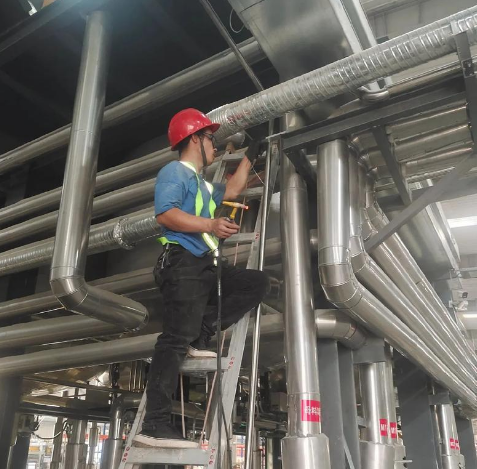
  • On-site Rivet Welding Techniques and Safety Standards for Pipe Installation and Repair

    On-site rivetingWelding and pipework installationspecial challenges in
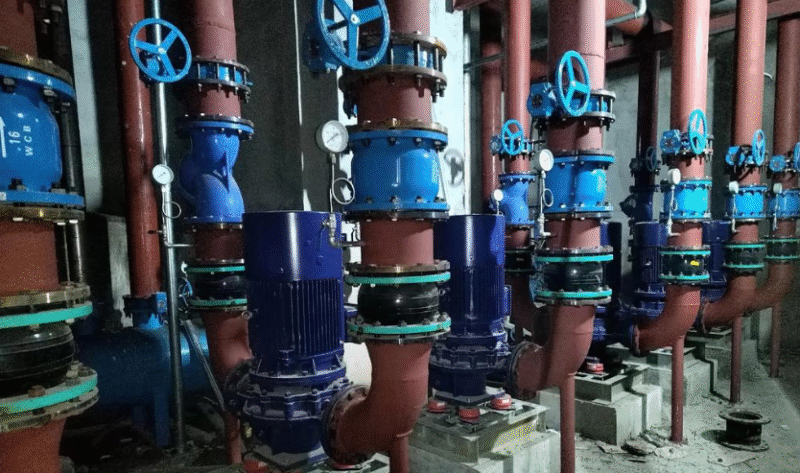
    The installation and repair of pipework frequently encounter challenges such as spatial constraints, complex environments, and tight deadlines, making rivet welding techniques on-site pivotal to resolving these issues. Unlike factory settings, field welding necessitates adapting to specialised conditions including fluctuating weather, variations in pipe materials, and heightened safety risks. This paper delves deeply into the core techniques and safety standards of field rivet welding, supporting construction teams in enhancing efficiency and achieving zero accidents.

    Part One: Preparatory Work for Rivet Welding on Site
    Environmental Assessment and Risk Management

    Confirmation of work area: Verify that no flammable or explosive materials are present, and install fire-retardant sheets and fire extinguishers.

    Weather Adaptability: Install windbreaks when wind speeds exceed 2 metres per second. Suspend operations during rainy or snowy weather.

    Pipeline Pre-processing Technology

    Chamfering: Employ portable chamfering machines to ensure precision in both angle (typically 30–35°) and chamfer width (1–2mm).

    Cleaning process: Remove oil stains and rust using acetone or a specialised cleaning agent. Stainless steel pipes must be protected from contamination by carbon steel.

    Preparation of equipment and materials

    A lightweight inverter welder (e.g., Miller Maxstar) shall be employed, equipped with a generator.

    Welding material management: On site, use a welding rod insulation tube (maintaining 80–110°C) to prevent moisture absorption.

    Part Two: Core Technologies of On-Site Welding
    Welding strategies for different positions

    Horizontal fixed pipe (5G position): To control deformation, the segmented welding method is employed, with each section's length not exceeding 30 times the diameter of the welding rod.

    Vertical fixed pipe (2G position): Increase penetration depth through vertical welding and control interpass temperature below 150°C.

    Inclined pipe (6G position): The most challenging position, requiring the use of oscillating welding technique to maintain a constant arc length.

    Key Considerations for Welding Special Material Pipes

    Carbon steel pipes: Dry low-hydrogen welding rods (350–400°C × 1 hour), prevent cracking through controlled cooling after welding.

    Stainless steel pipe: employs argon gas shielding (flow rate 5-10 L/min) and low-current high-speed welding.

    Alloy steel pipes: Strict preheating (in accordance with PQR requirements), stress relief through post-weld heat treatment.

    Defect Prevention and Emergency Response

    Prevention of pinholes: Ensure the purity of the protective gas and verify the integrity of the gas piping.

    Treatment for poor fusion: After cleaning the root area with a carbon arc gas grinder, perform re-welding.

    Deformation correction: Restore linearity using hydraulic compensators or flame correction methods.

    Part Three: On-Site Safety Regulations and Standards
    Personal Protective Equipment (PPE)

    Welding face shields: We recommend the use of auto-darkening face shields (e.g., 3M Speedglas).

    Protective clothing: flame-retardant workwear, insulated gloves, safety boots.

    Respiratory protection: In confined spaces, use a powered air-purifying respirator (PAPR).

    Work Permit and Guardianship System

    Hot Work Permit: Specifies the duration of work, safety measures, and the designated supervisor.

    Gas detection: Prior to commencing work, detect combustible gases (LEL < 10% by volume) and oxygen concentration (19.5–23.5% by volume).

    Confined space operations: Mandatory ventilation, provision of escape routes, deployment of rescue equipment.

    Protection of the Environment and Community

    Noise control measures: Employ noise barriers and avoid night-time operations.

    Waste Management: Welding slag and waste welding materials shall be collected separately as hazardous waste.

    Part Four: Case Studies and Technological Innovation
    Example: Emergency pipe repair at a chemical plant

    Problem: A leak has occurred in the DN300 stainless steel pipe due to corrosion, necessitating pressure welding.

    Solution: By adopting the Bell welding technique (perforated plug welding) and utilising Inconel 625 welding material, repairs were successfully completed without operational downtime.

    Trends in Technological Innovation

    Automated on-site welding: Enhanced consistency through track-mounted welding robots (e.g., Bug-O system).

    Digital monitoring: Transmitting welding parameters in real time to the cloud via IoT sensors for analysis.

    Environmental protection technology: Low-fume flux-cored arc welding wire (FCAW-G) reduces environmental pollution.

    Judgement
    On-site pipe welding represents the comprehensive embodiment of technical skill, experience and safety. By continuously updating technical knowledge, strictly adhering to safety regulations, and actively incorporating automated equipment and digital tools, the engineering team can efficiently and safely complete operations within complex environments.

  • How to Select a Reliable Aluminium Alloy Rivet Welding Service Provider? Six Evaluation Criteria

    Aluminium alloy rivetsolubleThe Importance of Service Provider Selection
    Aluminium alloys are widely utilised in sectors such as aerospace, automotive manufacturing, and shipbuilding due to their lightweight, corrosion-resistant, and high-strength properties. However, welding aluminium alloys frequently presents challenges including porosity, heat-affected zone cracking, and distortion, placing exceptionally high demands on the technical capabilities of processing service providers. How does one select a reliable partner from the multitude of service providers? This article systematically outlines six evaluation criteria to support informed decision-making.

    Criterion One: Technical Qualifications and Industry Accreditation
    Authentication is required.

    ISO 9001 Quality Management System Certification: Ensures that service providers maintain stable quality management processes.

    Specialised industry certifications such as Aerospace AS9100 and Automotive IATF 16949.

    Welding qualification certification: for example, AWS (American Welding Society) certified welders, EN 287 international welder qualifications, etc.

    Equipment and Process Certification

    We possess specialised welding equipment for aluminium alloys (including AC pulse TIG welders and variable-polarity plasma welders).

    The Welding Procedure Specification (WPS)/Procedure Qualification Record (PQR) complies with AWS D1.2 "Specification for Welding Aluminium Alloys".

    Criterion 2: Expertise in Materials and Manufacturing Technology
    Identification Capability of Aluminium Alloy Series

    Distinguish between non-heat-treatable alloys (e.g., 1xxx, 3xxx, 5xxx series) and heat-treatable alloys (e.g., 2xxx, 6xxx, 7xxx series).

    Understanding the welding characteristics of different alloys: for instance, aluminium alloy 5052 exhibits excellent crack resistance, whilst 6061 requires strict control of heat input.

    Selection of welding processes

    Thin plates (<3mm) are best suited to TIG welding, whilst medium-thick plates may be welded using MIG welding.

    In aerospace components, it is necessary to master high-precision processes such as Variable Polarity Plasma Arc Welding (VPPA).

    Criterion 3: Quality Management System and Inspection Capability Image [2] - How to Select a Reliable Aluminium Alloy Riveting and Welding Service Provider? Six Major Evaluation Standards - Dalian Fuhong Machinery Co., Ltd.
    Process control

    Pre-welding cleanliness control: Remove oxide scale through chemical cleaning or mechanical polishing.

    Purity of protective gas: Argon gas purity shall be 99.9911% or higher (TP3T). Equipped with a dew point detector.

    Non-destructive testing capability

    Equipped with X-ray, ultrasonic, and penetrant testing apparatus.

    We provide inspection reports compliant with standards such as ASTM E164 Welding Inspection Specifications.

    Criterion 4: Case Experience and Industry Reputation
    Review of Successful Cases

    We request the provision of case studies for similar projects (e.g., automotive body welding, ship deck structures).

    Examine its proven track record in complex structures (such as irregular curved surfaces and the joining of thick and thin plates).

    Customer feedback and reputation within the industry

    Inquire about corporate ratings through industry associations (e.g., the China Welding Association).

    Refer to customer reviews on third-party platforms (e.g., Alibaba Industrial Products).

    Criterion 5: Research and Development and Problem-Solving Capabilities
    Process Optimisation Capability

    Can welding parameters be optimised using DOE (design of experiments)?

    Addressing special requirements: for example, developing low-heat-input processes to minimise deformation.

    Defect Analysis and Correction

    We provide microstructural analysis reports (SEM/EDS) for welding defects (such as porosity and cracks).

    Possess welding process simulation capabilities (e.g., deformation prediction using Simufact Welding software).

    Benchmark 6: Supply Chain and Service Level
    Delivery capacity and lead time

    Assess whether production capacity meets demand and whether the capability exists to handle urgent orders.

    Raw material procurement channels: Whether partnerships exist with renowned aluminium material suppliers (e.g., Alcoa, Alcoa China).

    Afta Services and Technical Services Portfolio

    We provide welding technology training and on-site process guidance.

    We guarantee the quality assurance period and provide regular follow-up.

    Proposal for the Selection Process
    Preliminary selection: Narrow down candidates to 3–5 companies based on qualifications and track record.

    On-site inspection: Investigate factory facilities and quality management processes.

    Test specimen testing: Requires the provision of weld test specimens and the implementation of third-party inspection.

    Overall assessment: The final decision shall be made after comprehensively considering the quotation, delivery schedule, and service.

    Judgement
    Selecting a reliable aluminium alloy rivet welding service provider requires a multifaceted assessment encompassing technical capability, quality, and service. It is recommended that enterprises focus not solely on price, but rather prioritise technical compatibility and consistent quality within long-term collaborative relationships to ensure product performance and production safety.

  • How to Select a Reliable Aluminium Alloy Rivet Welding Service Provider? Six Evaluation Criteria

    Aluminium alloyRivet Welding Service ProviderThe Importance of Choice
    Aluminium alloys are widely utilised in sectors such as aerospace, automotive manufacturing, and shipbuilding due to their lightweight, corrosion-resistant, and high-strength properties. However, welding aluminium alloys frequently presents challenges including porosity, heat-affected zone cracking, and distortion, placing exceptionally high demands on the technical capabilities of processing service providers. How does one select a reliable partner from the multitude of service providers? This article systematically outlines six evaluation criteria to support informed decision-making.

    Criterion One: Technical Qualifications and Industry Accreditation
    Authentication is required.

    ISO 9001 Quality Management System Certification: Ensures that service providers maintain stable quality management processes.

    Specialised industry certifications such as Aerospace AS9100 and Automotive IATF 16949.

    Welding qualification certification: for example, AWS (American Welding Society) certified welders, EN 287 international welder qualifications, etc.

    Equipment and Process Certification图片[1]-如何选择可靠的铝合金铆焊加工服务商?六大评估标准-大连富泓机械有限公司

    We possess specialised welding equipment for aluminium alloys (including AC pulse TIG welders and variable-polarity plasma welders).

    The Welding Procedure Specification (WPS)/Procedure Qualification Record (PQR) complies with AWS D1.2 "Specification for Welding Aluminium Alloys".

    Criterion 2: Expertise in Materials and Manufacturing Technology
    Identification Capability of Aluminium Alloy Series

    Distinguish between non-heat-treatable alloys (e.g., 1xxx, 3xxx, 5xxx series) and heat-treatable alloys (e.g., 2xxx, 6xxx, 7xxx series).

    Understanding the welding characteristics of different alloys: for instance, aluminium alloy 5052 exhibits excellent crack resistance, whilst 6061 requires strict control of heat input.

    Selection of welding processes

    Thin plates (<3mm) are best suited to TIG welding, whilst medium-thick plates may be welded using MIG welding.

    In aerospace components, it is necessary to master high-precision processes such as Variable Polarity Plasma Arc Welding (VPPA).

    Criterion 3: Quality Management System and Inspection Capability图片[2]-如何选择可靠的铝合金铆焊加工服务商?六大评估标准-大连富泓机械有限公司
    Process control

    Pre-welding cleanliness control: Remove oxide scale through chemical cleaning or mechanical polishing.

    Purity of protective gas: Argon gas purity shall be 99.9911% or higher (TP3T). Equipped with a dew point detector.

    Non-destructive testing capability

    Equipped with X-ray, ultrasonic, and penetrant testing apparatus.

    We provide inspection reports compliant with standards such as ASTM E164 Welding Inspection Specifications.

    Criterion 4: Case Experience and Industry Reputation
    Review of Successful Cases

    We request the provision of case studies for similar projects (e.g., automotive body welding, ship deck structures).

    Examine its proven track record in complex structures (such as irregular curved surfaces and the joining of thick and thin plates).

    Customer feedback and reputation within the industry

    Inquire about corporate ratings through industry associations (e.g., the China Welding Association).

    Refer to customer reviews on third-party platforms (e.g., Alibaba Industrial Products).

    Criterion 5: Research and Development and Problem-Solving Capabilities
    Process Optimisation Capability

    Can welding parameters be optimised using DOE (design of experiments)?

    Addressing special requirements: for example, developing low-heat-input processes to minimise deformation.

    Defect Analysis and Correction

    We provide microstructural analysis reports (SEM/EDS) for welding defects (such as porosity and cracks).

    Possess welding process simulation capabilities (e.g., deformation prediction using Simufact Welding software).

    Benchmark 6: Supply Chain and Service Level
    Delivery capacity and lead time

    Assess whether production capacity meets demand and whether the capability exists to handle urgent orders.

    Raw material procurement channels: Whether partnerships exist with renowned aluminium material suppliers (e.g., Alcoa, Alcoa China).

    Afta Services and Technical Services Portfolio

    We provide welding technology training and on-site process guidance.

    We guarantee the quality assurance period and provide regular follow-up.

    Proposal for the Selection Process
    Preliminary selection: Narrow down candidates to 3–5 companies based on qualifications and track record.

    On-site inspection: Investigate factory facilities and quality management processes.

    Test specimen testing: Requires the provision of weld test specimens and the implementation of third-party inspection.

    Overall assessment: The final decision shall be made after comprehensively considering the quotation, delivery schedule, and service.

    Judgement
    Selecting a reliable aluminium alloy rivet welding service provider requires a multifaceted assessment encompassing technical capability, quality, and service. It is recommended that enterprises focus not solely on price, but rather prioritise technical compatibility and consistent quality within long-term collaborative relationships to ensure product performance and production safety.

    © Copyright Notice
  • Technical Requirements for Riveting and Welding Processes of Special Materials in Pressure Vessel Manufacturing

    Rhodium welding of special materialsPressure vesselin which it plays a vital role
    Pressure vessels, as core equipment in sectors such as energy, chemical industry, and aerospace, have safety and reliability that directly impact production safety and environmental protection. As industrial demands evolve towards extreme environments involving high temperatures, high pressures, and corrosion resistance, the limitations of conventional materials become increasingly apparent. Consequently, rivet welding processing technology for special materials (including high-strength steels, stainless steels, nickel-based alloys, and titanium alloys) has become a critical process in pressure vessel manufacturing. This paper provides a detailed analysis of the requirements, process challenges, and industry application cases within the welding technology of special materials, offering specialised reference information for relevant practitioners.

    Part One: Properties of Special Materials and Welding Challenges
    High-Strength Low-Alloy Steel (HSLA)

    Characteristics: High yield strength and good toughness, but prone to cold cracking during welding.

    Technical requirements: Strictly control preheating temperature (typically 150–250°C), employ low-hydrogen welding consumables, and implement post-weld hydrogen removal treatment.

    Austenitic stainless steel (e.g. 304, 316L)

    Characteristics: Exhibits excellent corrosion resistance, but is prone to thermal cracking and intergranular corrosion during welding.

    Technical requirements: Select ultra-low carbon welding materials, control interpass temperature (<150°C), and employ argon arc welding shielding gas.

    Nickel-based alloy (e.g., Inconel 625)

    Characteristics: Resistant to high-temperature acidification and stress corrosion, but prone to thermal cracking and porosity during welding.

    Technical requirements: Thoroughly clean the bevel, use suitable welding materials, and control heat input.

    Titanium and titanium alloys

    Characteristics: High strength-to-weight ratio and corrosion resistance, but susceptible to contamination by oxygen and nitrogen during welding.

    Technical requirements: Complete inert gas shielding (back shielding), high-purity argon gas, thorough cleaning prior to welding.

    Part II: Core Technical Requirements for Riveting Special Materials Image [2] - Technical Requirements for Riveting Special Materials in Pressure Vessel Manufacturing Dalian Fuhong Machinery Co., Ltd.
    Process Evaluation and Compliance with Standards

    Compliance with industry standards such as ASME Section VIII and GB150 is mandatory.

    Welding procedure qualification (WPS/PQR) must cover all material thicknesses and joint configurations.

    Selection of Welding Methods

    Tungsten inert gas welding (GTAW/TIG): Suitable for thin-walled and precision components.

    Gas Metal Arc Welding (GMAW/MIG): Suitable for high-efficiency welding of medium-to-thick plates.

    Submerged Arc Welding (SAW): Applied to longitudinal and circumferential welding of thick-walled vessels.

    Heat treatment control

    Preheating and post-heating: Prevent cold cracking and improve residual stress distribution.

    Solution treatment: Employed to restore the corrosion resistance of austenitic stainless steels.

    Stress relief annealing: Reduces residual welding stresses and enhances dimensional stability.

    Requirements for Non-Destructive Testing (NDT)

    Radiographic Testing (RT): Detects internal defects (pores, incomplete fusion, etc.).

    Ultrasonic Testing (UT): Applied for crack detection in thick-walled vessels.

    Penetrant Testing (PT) and Magnetic Particle Testing (MT): Employed for the inspection of surface defects.

    Part Three: Industry Applications and Trends
    Chemical reaction vessel

    Case Study: In a polymerisation reactor lined with Hastelloy C-276, a corrosion-resistant layer was successfully welded using strip thermal spraying technology.

    Pressure vessel of a nuclear power plant

    Case Study: In thick-walled welding of SA508 Gr.3 steel, the adoption of narrow-gap submerged arc welding achieved both enhanced efficiency and reduced distortion.

    Trends in Development

    Intelligent welding system: Integrates sensors to monitor welding parameters in real time.

    Applications of Composite Materials: Plasma Spraying Technology for Metal-Ceramic Composite Coatings.

    Green manufacturing: Application of low-fume welding consumables and high-efficiency welding power sources.

    Judgement
    The rivet welding technology for special materials in pressure vessel manufacturing is subject to exceptionally stringent requirements, intersecting multiple disciplines including materials science, process engineering, and quality management. Only by establishing a comprehensive welding management system, maintaining continuous investment in research and development, and cultivating highly skilled technical teams can enterprises sustain competitive advantage in high-end manufacturing sectors.

  • What is the calculation of machining input? Factors affecting the price of machining10

    When you receive a machining quotation, have you ever been puzzled: how is this price arrived at? Why can the price of two parts that look similar be several times different? Transparent and reasonable quotation is the basis of trust and cooperation. This article will completely open the machining quote "black box", detailed analysis of its cost model, and systematic combing of the final price of the top ten key factors, so that you from the "passive recipients" to "active evaluator! "Even at the design stage, you can effectively control the cost.

    Introduction: Quotations are not magic, they are fine calculations

    Machining quotes are not arbitrary estimates, but are based on sophisticated calculations of resource consumption (time, materials) and process complexity. The core formula can be simplified as follows:

    Total part price = Material cost + Machining cost (man hours) + Outsourced processing costs + Management fee and profit.

    Of these, processing costs are the largest variable and are the focus of this paper's analysis.

    Part 1: The four core cost components of a quote

    Cost of materials:

    Calculation: (net weight of part + processing losses) x unit price of material.

    Key point: Material utilisation is critical. Cutting a part from a standard-sized sheet or bar, the remaining "trim" cannot be credited to the next part at its original cost. Complex or fragmented nesting can lead to low utilisation and cost spikes. Supplier sourcing channels and inventory can also affect unit prices.

    processing cost(labour hourly rate):

    This is the core of the offer and the technical content. The formula for calculation is:

    Processing cost = preparation time x rate + processing time x rate

    Preparation time (one-off): Includes time for process planning, CAM programming, machine set-up, making simple fixtures and fittings, and first-piece commissioning and inspection. This cost is particularly significant for low-volume, multi-variety orders when it is spread over a single piece.

    Machining Time: The time the machine actually runs to cut. Calculated by CAM software based on accurate simulation of tool paths, or estimated based on experience. The hourly rate of a machine depends on its value (5-axis rate > 3-axis rate), depreciation, energy consumption and plant costs.

    Outsourced processing fees:

    After the parts are processed, if heat treatment (quenching, tempering), surface treatment (anodising, plating, painting, sandblasting), special processing (wire-cutting, EDM), etc. are required, this part will be completed by the supplier's outsourcing or own department, and the cost will be listed separately.

    Overheads, profits and packaging and transport:

    Covers project management, quality control, business operating costs and reasonable profit. Formal quotations will clearly reflect this or include it in the labour hourly rate. Packaging and logistics costs are usually charged separately.

    Part II: Ten key factors affecting the price of parts machining (from most important to least important)

    Factor 1: Part complexity and number of features (determining factor)
    This is the most significant factor affecting machining time. A part covered with deep cavities, thin walls, complex surfaces, and tiny hole systems, compared to a simple square:

    Longer and more complex tool paths.

    More tool changes are required (different tools machining different features).

    Multi-face clamping or even multi-axis machining may be required.

    Programming and debugging time increases exponentially.

    Increases processing risk and may result in additional costs.

    Factor 2: Dimensional accuracy and geometric tolerance requirements
    The tighter the tolerances, the higher the price. An increase from ±0.1mm to ±0.025mm could mean:

    More sophisticated machine tools are needed.

    A slower finishing feed rate is required.

    Additional finishing processes need to be added (e.g. rough milling followed by finish milling, or milling followed by grinding).

    Requires more expensive testing equipment and longer testing times.

    Factor 3: Surface finish requirements
    Requirement of Ra 1.6μm vs Ra 0.4μm, huge cost difference. High finish requirement:

    Replacement of specialised finishing tools may be required.

    The feed rate must be reduced and the machining time extended.

    Separate processes such as polishing may need to be added.

    Factor IV: Number of orders (batch effect)
    This is the key to the cost per piece. Producing 100 pieces versus producing 1 piece:

    Programming and preparation time is dramatically diluted.

    Toolpaths and fixtures can be optimised for more efficient batch machining.

    Materials can be purchased in large quantities, reducing costs.

    The learning curve effect makes subsequent processing faster and faster.

    Factor 5: Selection of raw materials

    Material unit price: aluminium alloy, common steel, stainless steel, titanium alloy, PEEK plastic, the price difference can be tens of times.

    Machinability: Machining titanium alloys can take 2-3 times as long as machining aluminium alloys because lower cutting parameters, more wear-resistant tools and higher power consumption are required.

    Factor 6: Part Size and Weight

    Directly affects the cost of materials.

    Larger, more expensive machine tools are needed to accommodate them.

    Large workpieces are more difficult and time-consuming to clamp and lift.

    May exceed standard machine travel and require special equipment.

    Factor 7: Need for Workholding Fixtures

    Parts that can be clamped in a simple vise or platen at low cost.

    The need to design and produce special fixtures (e.g., for shaped parts) will result in a one-time tooling charge.

    Multi-face machining requires multiple reclamps, increasing time and risk of error.

    Factor 8: Post-treatment and special process requirements

    Anodising, hard oxidising, electroplating, laser marking, etc., charged according to the area or complexity of the process.

    Speciality processes (e.g. magnetic grinding, ultrasonic cleaning) also add to the cost.

    Factor 9: Supplier's level of operation and geography

    Equipment sophistication: It may be cheaper to use a highly efficient 5-axis machine than to use a 3-axis machine to machine complex parts in multiple clampings.

    Process experience: Experienced engineers are able to plan better and less time-consuming process routes.

    Geographic manpower and operating costs: There are significant variations by region.

    Factor 10: Delivery time urgency

    Standard delivery prices are normal.

    Expedited orders may be subject to additional charges because it disrupts the normal production schedule and may need to be prioritised or scheduled for overtime.

    Part 3: How to get reasonable quotes and optimise costs? --Tips for Purchasers and Designers

    Provide clear and complete technical information: A standard 3D model (STEP/IGS) and 2D drawings with tolerances (PDF/DWG) are the basis. Vague requirements will inevitably lead to inflated quotations (in order to cover risks) or disputes at a later stage.

    Conduct Early Supplier Involvement (ESI) and DFM analysis: Send designs to experienced fabricators for review before finalisation. Their design for manufacturability recommendations can often lead to significant process simplification and cost reductions.

    For example: add a small rounded corner to avoid stress concentration in the sharp corner and facilitate tool machining; unify the hole diameter to reduce the number of tool changes; relax the tolerance of non-matching surfaces.

    Seek a transparent breakdown of the quote: Ask if the quote can provide an approximate percentage of the cost components (% of material, % of processing, % of outsourcing, etc.). This will help you judge the reasonableness of the price.

    Consider jobbing: If you have a variety of small parts, ask if you can "job shop" or "job shop" and share material sheets and machine setup time, which can dramatically reduce unit costs.

    Balance quality and cost: Define the end use of the part. A functional prototype for internal testing can have different accuracy and surface requirements, and should cost differently, than a part for the final product.

    Conclusion: A win-win situation built on understanding
    Machining quotation is a comprehensive art that combines materials science, process engineering and resource management. Understanding the logic behind it and the top ten influencing factors will not only enable you to read and understand the quotation, but also make you a cost control leader from the source of product design. The most successful co-operation comes from the customer's respect for the logic of manufacturing and the supplier's professional pursuit of the optimal solution to value.

    The next time you receive a quote, it is worthwhile to review each of these ten factors against each other. For any quotation, we promise to provide a clear explanation of the cost components and professional design optimisation suggestions, because we believe that transparent cost starts with professional design, and successful long-term cooperation starts with a deep understanding of each other. Welcome to hand over your design challenges to us, and let's work together to find the best balance between quality, efficiency and cost!

  • Rotary disc machining, flues machining, drilling machining, and general machining engineering for mechanical machining are explained.

    The world of machining rotary disc machining and FLEX machining is a world of シンフォニー with the skill of making "weapons" and forming materials with precision.Rotary disc machiningIn addition to the words "processing", "flues", "drells", "grinding", and "machining", we have a basic plan for building a modern industrial civilisation that is not tamed by specialists. In this booklet, the four central processing methods are explained in detail, along with their principles, characteristics, and applications, and they are also linked to the process of transforming precision parts into a panoramic guide.

    Hajime: "Weapons" for mechanical processing

    Each machining programme is designed to solve the manufacturing problems of different shapes by designing working machines, cutting tools, and specific clusters for each machine. The first step to understanding the intrinsic differences in the design of parts, engineering, and the evaluation of the service is to understand the nature of the product and to evaluate it.

    Patent I: Technology of Rotary Disc Processing - Rotary Disc Processing

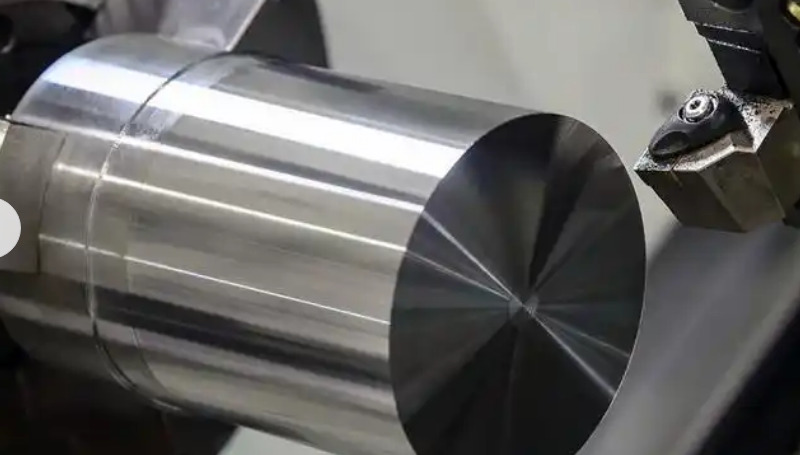
    Nucleus and Principle: The work is turned back, and the tool is delivered in a straight line or a curved line. Pottery デッサンを思い浮かべてください。 Blanks are turned back and the hand (tool) is shaped to the shape. Rotary disc machining is the main process for turning the fretwork.

    Main working machines: rotary discs, CNC rotary discs, composite rotary discs.

    Main Motion: The workpiece travels in the main motion (turning), and the tool travels in the feed motion (motion along the X-axis and Z-axis).

    Processing Dekiru Characteristics:

    Revolutions: Madagascar, Madagascar cone.

    End face/segment difference: The end face of the part and the shifting surface of the different diameters.

    Neji: Inner Neji and Outer Neji (Simultaneous movement).

    Grooving and Cutting: The grooving of the ring and the final cutting of the part at the bar.

    Forming surface: Forming tools are used to process the complex turning surfaces in CNC workshops.

    Prospectus Characteristics and Benefits:

    Efficient material removal: The L/D ratio is large in the case of the top part, and high efficiency is achieved in the case of the processing of the flue gas.

    Excellent Coaxiality and Durability: The shape of the clamp is processed around the same axis in one pass, and the high coaxiality is guaranteed.

    Superior Surface Finish: The superior surface quality achieved by the machining of the serigraphy disc.

    Typical parts used: Draibs, Neji, Bush, Flange, Natt, Hydraulic pressure relay, etc.

    Pattern II: Multi-faceted sculpture - Flames Processing

    Basic Principle: The tool is turned back, the work (またはカッター) is sent in a straight line in multiple directions. The sculptor is turning back to the carving knife to make ってブランクを processingするようなもの. Flowers processing is the main product of the main product of the complex shape of the non-turning body to process.

    Main working machines: Flies, mounting centres (vertical and horizontal), 5-axis mounting centres.

    Main Motion: The tool travels in the main motion (high speed rotation), and the worktable (or head) travels in the feed motion (X, Y, Z, and motion along the axes above).

    Processing Potential (Extremely Wide Surround)

    Planes: Horizontal, Vertical, Oblique.

    Slot and Clevis: V-shaped grooves, T-shaped grooves, specific shapes of pints.

    Complex and varied services: gold-type kibbets, Inpurabread, ergonomic services (on multi-axis rhinoceros).

    Cavity machining system: Dural machining is possible, and positional accuracy is required for multiple cavities to be machined.

    Classification of Claves

    Flat surface processing: Highly efficient processing of flat surfaces with a large surface area using a durable microprocessor.

    エンドミル/エンドフライス: エンドミルを使ったフランク、スロット、輪郭の加工。

    Profiling: Complex three-dimensional surface processing.

    Prospectus Characteristics and Benefits:

    The softness of his followers: the processing of the shape of the hodo arayuru is possible, and the method of "Ho de mo house".

    High Precision and Complexity: Multi-axis CNC Flatbed is possible with ミクロンレベル's precision and very complex shapes.

    Multiple processes are possible in one clamp: the machine centers are equipped with tools for the automatic exchange of flowers, drells and tapering.

    Representative applied parts: Mobile phone systems, gold, engine brooches, blakettes, precision jigs, and molded parts.

    Patent III: Portfolio - Cavities and Machining

    COA-PRINSHIP: A processing method specially designed to open the hole in solid material. The tool (drill) is used for both the main turning movement and the axial feeding movement.

    Main working machine: Revolving disc, Rotary disc, Floating disc / Massing centre (Yori general no.).

    キーモーション: tools ga turn back, straight line to enter.

    Attention to all points

    Centring and zoning: Normally, a drill has a tendency to slip when cutting, and the position of its resultant hole is zoned. In general, it is necessary to determine the correct position of the gadgets in the centre of the drill.

    Accuracy and Pantallization of Holes: The accuracy and surface finish of holes opened by direct drilling are poor and are usually used in pre-machining processes.

    Post-processing: In order to improve the accuracy and surface quality of the precision points, it is necessary to do a lot of remanufacturing, remanufacturing, and revolving machining after drell machining.

    Enlargement of related programmes:

    Reema: Reema can be used to enter existing points with fine cuts and high precision to obtain good points.

    Boring: The use of a boring tool to enlarge existing holes (especially those on large trails) and to correct the location of the holes.

    Tapping: The use of a tapping device for the processing of a hole with an internal neji.

    Typical applications: cavities of parts necessary for connection of revolts, position determination of shuttles and pins, and fluid paths.

    Patent IV: Ultimate Spinning - Machining

    Core Principle: Countless small, hardened stones are combined with the tool and used to create a very fast line speed for microfabrication of the surface of the workpiece. It is designed to achieve the ultimate in accuracy and surface quality.

    Main Machines: Flat Grinding Discs, Cylindrical Grinding Discs, Internal Grinding Discs, Centres Grinding Discs, Tool Grinding Discs.

    Main Motion: The stone is turned back at high speed (main motion) and the workpiece is moved at low speed (feed).

    Prospectus Characteristics and Benefits:

    Ultra-high accuracy: Tolerances of IT5-IT7 and above (Mikron Lever).

    Surface finishes: Mirror effect with Ra 0.1μm or less.

    Processing of high hardness materials is possible: The processing of high hardness materials such as steel, super hard alloys, and ceramic materials is the only and the main means of processing them.

    Main Category

    Cylinder Grinding: Grinding the outer wheel of a seat part.

    Inside Cylinder Grinding: Grinding of the inside diameter of a Slipper type part.

    Flat Surface Grinding: Grinding the flat surface of a part.

    Centarese Grinding: High-performance OD grinding of small-diameter surfaces necessary for centarese hotels.

    Representative applied parts: Precision Spindles, Piston Rods, Guesses, Gold Inserts, Gum Gears, and Vegan Leather.

    Patent V: Coravopsis - Representative part of the engineering project

    Complex parts or a kind of processing is rare. For example, the manufacturing of precision spindles includes secondary processes:

    Horoshi: A saw that cuts off a rod.

    Raflaid: でThe shape of the finishes is based on the segmental difference of the finishes.
    Heat treatment: The hardness of the product is increased by the return of the product to the oven.

    Centrescale turning/grinding at the centre of the centreホール: Basis preparation for subsequent grinding.

    Cylindrical/centerless grinding: To achieve the required accuracy of the drawings and to achieve the desired finish, the main vegetables, galleries and hand syringes of the application are ground.

    Processing of flues: Processing of non-rotating shapes on flues and magnetic centres in the form of a gully.

    Klamp: Bari take, face take.

    Conclusion: Positive "Weapon of Choice""
    Rotary disc machining, flues machining, cavity machining, and other grinding processes. Korai no うち, dori を選択するか、あるいは組み合わせるかは、parts of the material, shape, precision requirements, バッチサイズ、コストgoalによって決まります。

    Choose from a car in the シャフト or a mil in the キャビティ.

    The mazudril is opened up to the point, and the fine points are sharpened to the point of the rima.

    Hard kute light weight tame, grainde deなければならない.

    The basic concepts of this project are to understand the practical and economical possibilities of manufacturing from the design files (DFM) to the manufacturing engineers and the commemorative materials. We have examined the complex parts drawings, their characteristics, and the "project routes" in the context of the analysis of the characteristics of the parts. If you have any questions about the engineering of a particular part, please leave a message on the drawing. Our engineering engineers perform expert engineering analyses on finished products from the Blank.

  • Processing of Small Volume Multi-Commodity Products for Trial Use and Concept Analysis

    In the era of rapid product manufacturing, "rapid" and "correct" are the central requirements of prototype manufacturing. In the case of small quantities (from a few to several hundred) or multiple products (multiple design bureaus and different parts), production models of a certain scale have become more or less suitable. We are also able to ensure the quality and precision of our products by using our own container and sockets, as well as our own processing software, which we have seen in many other countries. This note provides a detailed analysis of the use of the possible software in this Sinalo, a deep analysis of the elements of the structure of the container, and a practical selection of the strategies.

    Patent 1: Unique Issues and Conceptual Requirements for a Small Number of Multi-Variety Prototypes

    Mazu, it is specific to the Projekt's Petion Portfolio:

    Haimi-shingle: Reprogramming for frequent part exchange,Mechanical centrepiecePreparation of tools and fixtures is necessary every time.

    Uncertainty: The design may change over time, but a very soft and highly adaptable suprachain is necessary.

    Coating Stress: Gold type and tooling coats are the first thing to be considered for a processed coats in the case of mass production.

    The time of the programme: the shortest possible time is necessary for the diagrams to be shown in the Reed tiles in the handwriting of the person.

    The prototype has been tested and verified by functional test and assembly, and has been used in front of a relic, and its accuracy and material properties are consistent with the final product.

    The main elements are softness, spindles, and precision.

    Patent II: 4 Concrete Concepts and Their Applicable Sinariums

    In response to the above question, the modern manufacturing industry provides efficient solutions to the problem:

    Opus 1: Digital CNC Machining (Mainstream Opus)

    Sets:3-axis/5-axis direct use of CNC machining CAMソフトウェアでプログラムされたセンターは、standardなブランク(プレート、バー)から直接切断・成型します。

    Puzzle is not a funk:

    The cost of gold type is not required: In case of direct driving by digital film, frequent design reversal is possible.

    High material versatility: The use of appropriate engineering materials (Aluminium alloy, Stainless steel, POM, etc.) for mass production has resulted in reliable test results.

    High Precision: The superior inch accuracy and surface finish are directly achieved with less post-processing.

    The key to optimisation is to use high-speed machining struts, kits and automated jigs (such as overrun position determination systems) to prepare for, and to significantly reduce, the time required for segment picking and replacing.

    Opus 2: Sheet metal processing + CNC secondary processing

    The parts for the SIL and Blanket are made by applying an angle cutter and pitch process in the machining of the laser/ CNC panchanger, forming the shape of the body, and forming the main position in the secondary CNC flange process in the dreel process.

    Puzzle is not a funk:

    Very efficient: In the case of thin meat products, the laser cutting is done at high speed with the processing of the floss.

    Low Cost: High material utilisation and practical economy of the project.

    Flexibility: The graphic surface of the laser cut-off is changed to a real overcoat.

    The key to optimisation: DFM (Design for Manufacturing) is designed with the idea of minimising the need for secondary processing.

    Progamme III: Coordinated Manufacturing and Decentralised Production in Mogila

    仕組み:オンライン製造プラットフォーム(example:Xometry、Protolabs、Domestic クラウド工場)または地域のフレキシブル製造クラスターを活用する。 DesignFabrics is a powerful tool to analyse the engineering and price of a project automatically, and to allocate the price to the インテリジェント in the ネットワークのパートナー工場.

    Puzzle is a funk.

    Ultra-high speed: Full digital processing, ultra-high-speed measurement (per unit), utilisation of network capacity, and guaranteed delivery.

    Use of efficiency: The standardised prototype of the use of the ProtonTapering is the most suitable one.

    Transparency in Price Comparison: Quick and easy access to a number of different options.

    Note: It is not necessary to make complex projects, special projects, or projects with detailed technical information to be effective in a professional workshop or to obtain them directly.

    Opsion IV: 3D Plento + CNC Masters Pantalla (ハイブリッド・オプション)

    The "Metal 3D Printer" is a functional prototype with high precision, high strength, and necessary for specific materials, which is used in industrial green SLA/DLP/SLS 3D printers for rapid prototyping. +The "Metal 3D Plate + CNC Master Functions" applique is used.

    Puzzle is not a funk:

    Compatibility with very complex shapes:The parts are very complex, and CNC's coats are not legal, so it is economical.

    イテレーションの加速:3Dプリンティングは、形状や組み立ての関係を検証するスピードにおいて、他の追随を許しません。

    The key to optimisation: the purpose of the prototype (video artwork, assembly and functional artwork, etc.) is clearly defined, and the most economical technology is selected for assembly and integration.

    パート3:ディープ・コスト・ブレイクダウン - どこにお金をかけているのか?

    The key to understanding the constituent elements of a component is the key to calculating it. The following items are usually included in the small roto CNC machining parts:

    Programming and engineering (single project): This is a fixed fee of 1 to 100 units. Our experienced engineering team is able to optimise the processing time for the production of tampons. Multiple types of products are available, and the cost of the programme is high.

    Materials Fee:

    Raw material costs.

    Material utilisation (plan/bar network planning) is an important element. Small parts and dispersed parts can be processed by joining the parts with the printers, and a large reduction in the amount of material used can be achieved.

    Number of Processing Workers (Ranning Coasters of Working Machines)

    Calculation of the time spent on working machines (reduction in the cost of machines, manpower costs, and electricity costs).

    Time is determined by the amount of parts (the amount of material removed), the complexity of shapes (the number of times it is necessary to exchange tools), and the accuracy (low-speed finishes are necessary).

    Clamp and seat insert fee (exchange 1 time atari): Simple tool design, production, retrieval, and calibration time are included. This is one of the main reasons for the high cost of production of small quantities of many types of products. The use of the moulding jig has significantly reduced the time required for this process.

    Post-treatment and surface treatment cost: Bari extraction, sandblast, anodic acid treatment, makie, etc., 1 mart or 1 elia.

    Quality Inspection Material: The initial cost of precision inspection and the development of the inspection report.

    The strategy for the reduction of nuclear weapons:

    Design for Minimisation (DFM): engineering ingenuity and the early days of the Coravore, where engineering was simplified, the use of special tools was reduced, and non-critical tolerances were mitigated.

    ODD/PRETT PROCESSING: The same number of small parts are processed on the masseintele, and the same number of parts are processed in the same way, with a share of the printing and printing process.

    Selection of suitable material and Blank shape: Dekiru Dake cuts and selects the material, and the final shape of the part is close to the standard profile (e.g., for four-corner processing of thicker boards).

    Part 4: サプライヤーをどう選び、どう評価するか? -Programme Managements

    Good paternoster to choose, the programme is half successful. The following points have been examined on the Samplayer:

    Rapid Response and Conversion Capability: Design for Manufacturing (DFM) Failure to Provide a Quick Response?

    Flexibility of the equipment: overproduct portion of a sandwich system, kits and magazines are installed? The workplace is clean and tidy (reflecting the efficiency of management).

    Digitalisation of theベル: Is the number of CAM workers based on the number of automated CAM workers? Is the communication project clearly digitalised?

    Our expertise: We have seen many cases in the past of small rote production, which is a large single product.

    Transparent fee splitting: The fees recorded in the statement of account are clearly stated. The high transparency of the service is highly reliable.

    Judgement
    In the case of small-volume, multi-variety processing, we are able to compete with the size, flexibility, sophistication, and refined control capabilities. The secret to success is to optimise the design of the flotation system to an intelligent DFM design, and to select a specialised patented system for the barcode system with a digital management tool and a flexible production system. It is possible to understand the structure of the structure, and to use the strategies of corrugated sheets and mojigaray and zigzag, so that quality and time can be sacrificed and the prototype container can be placed in an appropriate area and surrounded by it. We are confident that our innovative products are based on reliable prototyping and patents, and that we have optimised a small number of laser printing machines and professional DFM consulting services to meet the needs of our customers. Initial part drawings will be displayed, and detailed analysis and transparency will be translated into a proposal.

  • What are the intrinsic differences and options between 3D Printers and conventional machining?

    In today's world of product development and manufacturing, designers and engineers are forced to make major decisions. The past few years have seen the development ofMachining(CNC)? This is a powerful technology that can be used to change physical parts in digital models, and its philosophy, programme, and field of application are very different. This note is a clear indication of the essential differences between the two in the vocabulary of mapping, and the purpose of providing a clear and meaningful decision on the most appropriate technology for the purpose of the program and its functions.

    Part I: Philosophical Opposition on the Basis - Toyosha's Opposition to Shrinkage

    This is a foundation stone for understanding the difference between the Suberian region and the other regions of the world.

    3D Printer (Layer Forming): Its name is commonly known as "Layer" Prospecting. The material (metal powder, resin, Plaschfilaments, etc.) is made of layers of materials (metal powder, resin, Plaschfilaments, etc.), and the micro-accumulation is used to make the "overlay" three-dimensional design, which is similar to the original idea. The "free manufacturing" and other aspects of the study are centred on the geometrical complexity, and they have been influenced by the work of Horton and Nandor.

    Machining (manufacturing by reduction): Its essence is "citation calculation". Completely なソリッドピース(金属、プラスチックブロック)からスタートし、切削工具が徐々に余分な部分を取り除き、目的の形状を得る。 Nuclear and Naru examination side is "precision sculpture" de Aり, the shape of the tool and the possibility of akセス to limit the restriction.

    This fundamental opposition is the result of the violation of both sides of the coin.

    Patent II: Comparison of the depths of multiple dimensions: capacity, content, quality of the game

    We would like to compare the following major sub-divisions in a systematic way:

    1. Geometric Complexity and Design Freedom

    DPRINTEIANG (victory): The revolutionary point of interest is this. Complex internal laning, lightweight construction of the Honeycomb, one-piece Assemblage, Organic Bionic Frames, etc., all of which are impossible in the conventional way, are included in the design, and the shapes that are imaginable are made in practice. Designer has no limitations in reality, and "Designer-led Manufacturing" is possible.

    CNC machining (Limitations): Limitations are imposed on the straight line and turn characteristics of the tool. Closed-circuit machining is necessary for direct machining, deep and narrow grooves, complex internal shapes, negative angles of friction, and many other occasions, as well as for special tools such as multiple clamps, and the coaster is not possible. The design is necessary to take into account the "Accessibility" of the tool.

    2. Material properties and isotropy

    3D Printers (Topics and Opportunities):

    The range of materials: ingenious graphics, plastics (nylon, Würthim), light-sensitive resins, metals (chitin, alminium, stainless steel, nylon based alloys), and even cellulose, has been expanding rapidly. However, there are a lot of differences in specific grades and properties (heat treatment, etc.) between the same grades and soluble materials.

    Anisotropy: In the case of the laminated layers, the bonding strength between the layers is usually lower than the strength within the layers, and as a result, the orientation of the mechanical properties is not as good as it should be. In this case, it is a problem to consider the high load resistance of the part.

    CNC Mashinig (Performance and Reliability)

    Materials: General steel and Aluminium kara, high-temperature alloys, chitin alloys, brass, cemented plastic (PEEK, PTFE), etc., and mechanically processed cemented materials, as well as other materials. Standard shapes (plates, rods, and tubes) are used, and it is very easy to establish that they have complete characteristics. Mechanical characteristics (forging, and consolidation) are common, preferred, and equivalent.

    Completeness of materials: mechanically processed parts maintain the compact structure and excellent characteristics of the base material.

    3. Accuracy, Surface, Details

    3D Printer (usually, post-processing is necessary):

    Accuracy: Metal printing (SLM/DMLS) is ±0.05 to 0.1mm max. and high precision resin (SLA/DLP) is high. Tadashi, the inch method of leximation and reversal is also available.

    Surface: The surface roughness (Ra value) is from several microns to several tens of microns, and the direct state (As-built) is rough, and in many cases, the post-treatment of sandblast, grinding, and chipping is necessary for the use of the product. The following is an example of the necessary post-treatment.

    CNC Mashinig (ネイティブ高精度):

    Accuracy: Precision Manufacturing of Bentimak. The standard CNC Flatbed machining can easily reach ±0.025mm, and the high precision machining machine can reach ミクロンレベル. Extremely high stability and predictability.

    Surface: Mirror finish (Ra < 0.4 μm) is a direct result of microfabrication and machining. CNC is the best choice for high-level applications such as optical parts and silicone parts.

    4. Production container structure and economy

    3D PRINTING: 1 pièce à tête côtre is the quantity and the relation between the quantity and the amount of amari. The initial cost is mainly for equipment and materials (special powders and resins are expensive). The economic model is "complex or simple, simple or expensive". Optimal:

    Complex parts for small roto/mono piis (tool/gold type fee is charged).

    Lightweight parts optimised for topography (saving on high value materials).

    The ProtoTape for Inspection is designed for high speed calibration.

    CNC machining: Costs are composed of "equipment reimbursement + material costs + labour time". The number of units (total of programming and cloning time) has increased, but the number of units per atari has decreased dramatically. The economic model is "simple or safe, complex or high". Memberships are not limited to the following:

    Naka・Mass production.

    Comparatively simple construction parts.

    Excellent surface and precision are necessary and necessary.

    5. Manufacturing Spiders and Reed Tables

    3D PRINTS: The shaping time is proportional to the volume/height of the pajamas. One of the patches is printed on a film, and the time is variable. A lot of different pairs of parallel production are suitable. In the case of complex patches, the CNC program allows for quick machining.

    CNC machining: The machining time is dependent on the amount of material removed and the correct correlation. Small and pure parts can be processed very quickly. It is also necessary to prepare the individual project and tools for the new part, as well as the time for the initial centerpiece application, so that continuous production of the same part can be carried out.

    Part 3: Dobu? -Application software to determine the application of the software

    Dokoro is superior to Dokoro," he said, "I'd like to ask you about a specific private news item. . The meaning of the following is determined by rojeki:

    The geometrical complexity of the parts is adjusted:

    The internal structure is unified, the surface is extremely complex, and the shape is optimised for the topography. → 3D Printer is a priority.

    What are the regular shapes (planar, cylindrical, and cavities) of the main part? → CNC machining is preferred.

    Evaluate the production roto-size and coaster targets:

    Is it necessary to have 1 to 100 parts? What are the complex parts? → 3D Printer is economical.

    Is it necessary to have more than 500 parts? Is it a pure part? → CNC machining is favoured by one Atari's tool.

    Materials and performance elements are confirmed:

    Is it necessary to have high strength and tensile strength? Is it necessary to use specific forging greed? → CNC machining is a safe option.

    Is it possible to start using a performance data sheet in the form of powder or resin? Are you looking for special alloys/composite materials? → 3D Printer is evaluated.

    Precision and surface considerations are taken into account:

    Is Ra <1.6μm or ±0.05mm tolerance necessary for elevation and surface? →We are looking forward to CNC machining as a means of post-processing and upgrading of 3D plating.

    Functional prototype, internal liner, or general surface elements? → 3D Printing is a straightforward and easy to use unit for post-processing.

    PART IV: CONCERNS AND FUTURES - HIBRIDES/MANIAC CHALLENGER TABLE TOP

    The most efficient software is the one that can be used in many different ways. HIBLID manufacturing is also available in Torrend:

    3D Printer + CNC: 3D Printer is a complex blend of Blanks and Neonet Shape, CNC precision machining, and complex and high precision baranas.

    CNC Substrate + 3D Printer Functions: 3D Printer (Example: DED Directed Energy Deposition) is used to add complex functions to the parts and repair worn-out parts.

    Conclusion: Replacement or Completion
    The 3D Printer and the new CNC Machine are unique in their characteristics, and the 3D Printer has the freedom of design, and the ability to deal with "impossible" shapes and a small number of complex parts, while the CNC Machine guarantees extremely high precision and reliable performance. The CNC machine guarantees extremely high accuracy and reliability, and is capable of efficiently producing "possible" normal parts and medium to large quantities of products.
    The ingenious ingenuity is based on the 5 core elements of the project, the shape of the Sunawachi, the material, the size of the rosette, the stitches, and the silicon tiles, and the rationality of the Treadeau. The next page depicts the parts in an illustration and compares them with this memory file. The complex interior and the precise shape of the part are difficult to hold, but the 3D printer and the 5-axis CNC system are provided with a 3D model that can be used to create a wallpaper or a bridge.

  • Processing Mecca Lancing - 2026 Selected Gadgets and Pitts Avoidance Adbies

    When your project is in dire need of a reliable machining partner, "the best nearbyMechanical WorkshopWhich one is it?" has become the most pressing question. The internet is full of "rankings", but the real choice is much more than a simple list. This article aims to provide you with a practical, actionable and up-to-date 2026 selection guide, showing you how to identify truly professional and reliable local suppliers and avoid common pitfalls, just like the industry insiders do.

    I. Rational view of "ranking": no absolute list, only matching standards

    First of all, let's be clear: there are very few official or completely objective "ranking lists" in the machining industry. So-called rankings are mostly based on advertising investments, web activity or reviews of a limited sample. Your goal is not to find the "number one", but to find the partner that "best fits your needs". A small manufacturer specialising in precision medical devices may not be able to take on large structural steel parts, and vice versa.

    II. Five-dimensional assessment method: core screening criteria for professional buyers图片[1]-附近机械加工厂家排名榜 – 2026年最新选择指南与避坑建议-大连富泓机械有限公司

    Forget fuzzy rankings and systematically evaluate potential vendors in the following five dimensions:

    1. Inventory of core technical capacity and equipment (hard-core inspection)

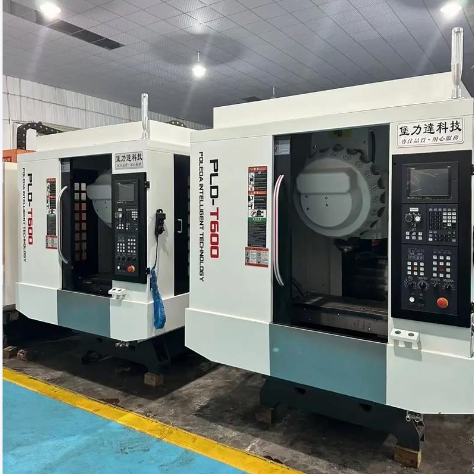
    Equipment sophistication: Ask to see their equipment list. Focus on the CNC brand (e.g. DMG MORI, MAZAK, Haas, etc.), the machining range (maximum stroke), and the availability of high-level equipment such as 5-axis machining centres and mill-turn machines. This directly determines the complexity and upper limit of accuracy of the parts they can handle.

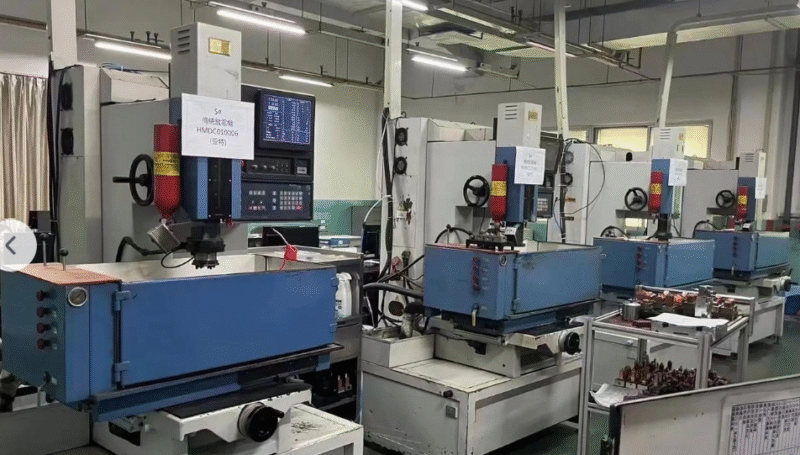
    Process coverage: In addition to CNC, do you have complete supporting capabilities for turning, milling, grinding, wire EDM, heat treatment, surface treatment, etc.? One-stop service can greatly shorten your supply chain cycle.

    Measurement and QC Capability: Do you have high-precision inspection equipment such as Coordinate Measuring Machine (CMM), Quadratic Imager, Roughness Meter, etc.? This is the key evidence of whether the quality commitment can be put into practice.

    2. Quality control systems and industry certification (credibility endorsement)

    System certification: ISO 9001 certification of the quality management system is the basic threshold. If serving the automotive (IATF 16949), aerospace (AS9100) or medical industries, the corresponding special certification is essential.

    Process Control: Ask about their quality control process. Do they perform First Article Inspection (FAI)? Is there a comprehensive inspection report (IPQC/IQC)? How are critical dimensions monitored in the process?

    Technical team: Are there professional process engineers and programmers? Their experience directly affects machining efficiency and cost.

    3. Industry experience and success stories (match verification)图片[2]-附近机械加工厂家排名榜 – 2026年最新选择指南与避坑建议-大连富泓机械有限公司

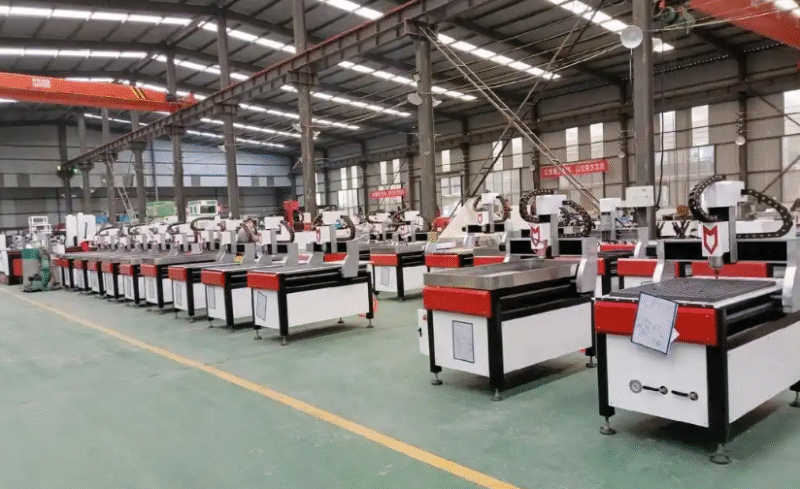
    Case Studies: Ask to see photos or videos of their past work, preferably in a similar product or industry to yours. The level of complexity and precision of the cases is more persuasive than the number.

    Client Testimonials: Look for testimonials from customers they have worked with for a long time, especially feedback on communication, problem solving, and delivery reliability.

    Trial capacity: For important projects, it is possible to offer to pay for a small trial run, which is the most direct way of checking their capacity.

    4. Communication responsiveness and service-mindedness (key to soft power)

    Speed of response: Is the response to your initial enquiry professional and timely? Can they make insightful process or design optimisation (DFM) suggestions for your drawings?

    Transparency in quoting: Does the quotation contain only a total price, or does it clearly list the breakdown of material costs, machining hours, tool sharing, surface treatment costs, etc.? Transparent quotes show professionalism and integrity.

    Project Management: Is there a dedicated project counterpart? Can you provide clear project timelines (e.g., programming, material preparation, machining, quality control, shipping)?

    5. Geographic location and capacity flexibility (practical considerations)

    The real value of "nearby": geographic proximity facilitates face-to-face technical communication, emergency sample delivery, and rapid problem solving, which is especially valuable during the development phase.

    Capacity Match: Evaluate whether their current order load matches your demand volume. A small workshop may not be able to meet your high-volume needs, while a large factory may have little interest in small prototype orders.

    III. Guidelines for efficient sourcing and fieldwork operations

    Online search: Use "precision machining + your city", "CNC machining + industry (e.g. automotive/medical)" and other combinations of keywords in Google, B2B platform search. Focus on browsing their official websites to see whether they are professional and whether the cases are detailed.

    Initial screening: Based on the above five-dimensional criteria, 3-5 interested manufacturers are screened.

    Initiate RFQ: Prepare a clear RFQ package including: detailed 3D drawings and 2D engineering drawings (PDF/DWG), material requirements, quantities, finishes, special criteria. Send it to candidate manufacturers to compare their response and professionalism.

    Site visit (highly recommended): For core suppliers, make sure to arrange a site visit. Observe whether the workshop is neat and orderly (5S management), the maintenance status of equipment, the working appearance of employees, and the management level of work-in-progress. Workshop environment is the most intuitive reflection of the management level.

    IV. Four key points of "pit avoidance" that we must be vigilant about in 2026

    The "low price trap": offers that are far below market rates are often compensated for by cutting corners (e.g., using inferior materials), sacrificing precision, subsequent mark-ups, or poor service. "Cheapest" usually means "highest total cost".

    The "Jack of all trades" trap: Factories that claim to "do it all" often lack depth. Manufacturers that specialise in a particular process or industry usually have a technological and experience advantage.

    The "vague communication" trap: Suppliers who are vague about technical requirements and unwilling to confirm details in writing are extremely risky. All key requirements (tolerances, material certificates, inspection criteria) must be on paper or in a contract.

    The "lack of data" trap: manufacturers who cannot provide a list of equipment, test reports or evidence of past cases, their ability to describe the need to be greatly reduced.

    Conclusion
    Choosing a machining manufacturer is a strategic partnership based on a professional assessment. In 2026, the competition in the manufacturing industry is becoming more sophisticated, and your partner must have both hard and soft power. By abandoning the pursuit of illusory "rankings", applying scientific evaluation methods, and taking the time to conduct in-depth investigations and communications, you can find a local manufacturing partner that you can trust to help your project succeed. A professional start is half the battle. When you are ready with detailed drawings and requirements, we are ready to visit you and provide you with a proven solution with our equipment list, case study library and transparent process.