
Rhodium welding of special materialsPressure vesselin which it plays a vital role
Pressure vessels, as core equipment in sectors such as energy, chemical industry, and aerospace, have safety and reliability that directly impact production safety and environmental protection. As industrial demands evolve towards extreme environments involving high temperatures, high pressures, and corrosion resistance, the limitations of conventional materials become increasingly apparent. Consequently, rivet welding processing technology for special materials (including high-strength steels, stainless steels, nickel-based alloys, and titanium alloys) has become a critical process in pressure vessel manufacturing. This paper provides a detailed analysis of the requirements, process challenges, and industry application cases within the welding technology of special materials, offering specialised reference information for relevant practitioners.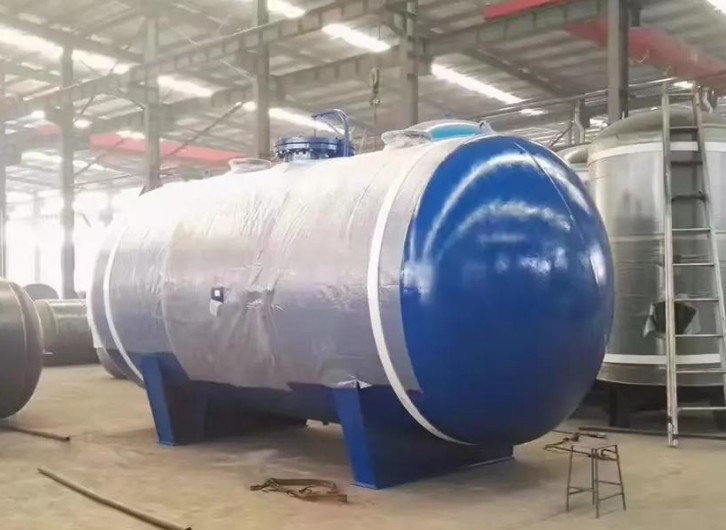
Part One: Properties of Special Materials and Welding Challenges
High-Strength Low-Alloy Steel (HSLA)
Characteristics: High yield strength and good toughness, but prone to cold cracking during welding.
Technical requirements: Strictly control preheating temperature (typically 150–250°C), employ low-hydrogen welding consumables, and implement post-weld hydrogen removal treatment.
Austenitic stainless steel (e.g. 304, 316L)
Characteristics: Exhibits excellent corrosion resistance, but is prone to thermal cracking and intergranular corrosion during welding.
Technical requirements: Select ultra-low carbon welding materials, control interpass temperature (<150°C), and employ argon arc welding shielding gas.
Nickel-based alloy (e.g., Inconel 625)
Characteristics: Resistant to high-temperature acidification and stress corrosion, but prone to thermal cracking and porosity during welding.
Technical requirements: Thoroughly clean the bevel, use suitable welding materials, and control heat input.
Titanium and titanium alloys
Characteristics: High strength-to-weight ratio and corrosion resistance, but susceptible to contamination by oxygen and nitrogen during welding.
Technical requirements: Complete inert gas shielding (back shielding), high-purity argon gas, thorough cleaning prior to welding.
Part II: Core Technical Requirements for Riveting Special Materials Image [2] - Technical Requirements for Riveting Special Materials in Pressure Vessel Manufacturing Dalian Fuhong Machinery Co., Ltd.
Process Evaluation and Compliance with Standards
Compliance with industry standards such as ASME Section VIII and GB150 is mandatory.
Welding procedure qualification (WPS/PQR) must cover all material thicknesses and joint configurations.
Selection of Welding Methods
Tungsten inert gas welding (GTAW/TIG): Suitable for thin-walled and precision components.
Gas Metal Arc Welding (GMAW/MIG): Suitable for high-efficiency welding of medium-to-thick plates.
Submerged Arc Welding (SAW): Applied to longitudinal and circumferential welding of thick-walled vessels.
Heat treatment control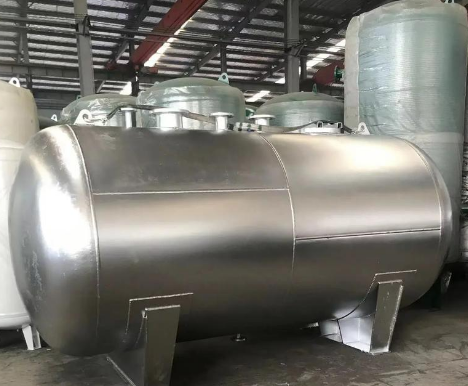
Preheating and post-heating: Prevent cold cracking and improve residual stress distribution.
Solution treatment: Employed to restore the corrosion resistance of austenitic stainless steels.
Stress relief annealing: Reduces residual welding stresses and enhances dimensional stability.
Requirements for Non-Destructive Testing (NDT)
Radiographic Testing (RT): Detects internal defects (pores, incomplete fusion, etc.).
Ultrasonic Testing (UT): Applied for crack detection in thick-walled vessels.
Penetrant Testing (PT) and Magnetic Particle Testing (MT): Employed for the inspection of surface defects.
Part Three: Industry Applications and Trends
Chemical reaction vessel
Case Study: In a polymerisation reactor lined with Hastelloy C-276, a corrosion-resistant layer was successfully welded using strip thermal spraying technology.
Pressure vessel of a nuclear power plant
Case Study: In thick-walled welding of SA508 Gr.3 steel, the adoption of narrow-gap submerged arc welding achieved both enhanced efficiency and reduced distortion.
Trends in Development
Intelligent welding system: Integrates sensors to monitor welding parameters in real time.
Applications of Composite Materials: Plasma Spraying Technology for Metal-Ceramic Composite Coatings.
Green manufacturing: Application of low-fume welding consumables and high-efficiency welding power sources.
Judgement
The rivet welding technology for special materials in pressure vessel manufacturing is subject to exceptionally stringent requirements, intersecting multiple disciplines including materials science, process engineering, and quality management. Only by establishing a comprehensive welding management system, maintaining continuous investment in research and development, and cultivating highly skilled technical teams can enterprises sustain competitive advantage in high-end manufacturing sectors.
 Chinese
  Japanese
  English
  German
  Finnish
Leave a Reply
You must be logged in to post a comment.