

Today's Precision Manufacturing CentreCNC machining centreCNC" and other words and phrases are known as "CNC", and they are also known as "ついてよく知らなないう方に、この記事でわかりやすく解説します:CNC machining and so on? What are the functions of the machine? What are the main types? What are the advantages and disadvantages of its kakegae and nano-core?
I. Definition of CNC Machining: Design Drawing to Realisation of Digital Bridges
CNC (Computer Numerical Control) is a technology that enables precision machining by automatically controlling working machines (flues, rotary discs, grinders, etc.) with commands from the computer software program in Arrakajima. Tsumari, the designer's digital 3-dimensional model (CADファイル) with mechanical understanding of the kiruコード(Gコード)に変換し, the work machine and the correct movement of the work piesを駆動して, the raw material of a part of the purpose of a part of the "彫り出す "自動動プロセスである.
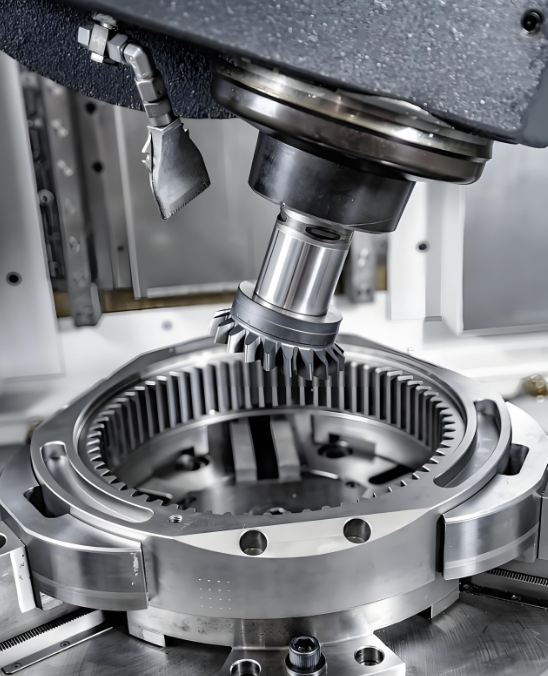
The essence of CNC is "automation" and "digitalisation" of manual work machines that are relied upon for human-handled operation. This makes it possible to manufacture complex shapes with high precision by using a combination of human-operated conflicts and skillet limitations.![图片[1]-はじめにとコア技術:CNC CNC加工とは?その動作原理、種類、核となる利点の詳細-大連富泓機械有限公司](https://jpdlfh.com/wp-content/uploads/2025/12/QQ20251102-193626.png)
II. Principle of CNC System Operation: Precision 3-Step Drives
CNC machining is a workstation project, and the workflow is divided into three coats and a stencil, which are linked to a systemised project:
1. Design Stage: CAD Modelling
All of our products are designed with the support of CAD (Computer Aided Design). Ingenia has created 3-dimensional digital models of parts using SolidWorks, AutoCAD, Fusion 360 and other software. The model defines the geometric characteristics, dimensions, and tolerances of the part and the subsequent operation of the part as a "digital design diagram".
2. Progress Stage: CAM Change and G Code Generation
It is a part of "頭ログラミング" of CNC. In the "Computer Assisted Manufacturing (CAM) Software Suite", an online portal is used to input the CAD model to the programmer, and a lot of important decisions are made in the CAM Software Suite:
Engineering design: Selection of working machines to be used (Flies processing, rotary disc processing, multi-axis machine centres).
Tool Selection:to select the appropriate tool for the machining shape (barren processing, processing, processing of flowers, processing of drells, processing of tapping, etc.).
Pas Plane: Define the track of the tool to be used for the work, and remove the material with high efficiency in case of conflict.
Parameter setting: Spindle number of revolutions, feed speed, depth of cut are set.
Once the site is up and running, CAM Software is able to automatically communicate with the G-code, which is a standardised language that includes the coordinate points, movement and speed codes that are directly known by the machine.
3. Practical stage: working machines
The CNC console (the machine's "resource") reads the G-code, and the service revolution is driven correctly. The motor is capable of controlling the movement of mechanical axes (X, Y, Z, and linear return axes, etc.), setting up the tooling and cutting off the material to which the tooling is fixed. The entire program is highly automated, and usually, the oprator can be used to clone the processed material, and the tool can be centred to start monitoring the process.
Types of CNC masonry and its applicable systems![图片[2]-はじめにとコア技術:CNC CNC加工とは?その動作原理、種類、核となる利点の詳細-大連富泓機械有限公司](https://jpdlfh.com/wp-content/uploads/2025/11/QQ20251102-193739.png)
CNC Machine is mainly classified into the following categories of katigori in terms of action modes and machining characteristics:
1.CNC Flip Chart: The most versatile and high quality turntable. The tool is turned back at high speed, the work is fixed on the tool, and the cutting is done by multi-axis reinking. It can be used for machining flat surfaces, grooves, complex wheels, and three-dimensional surfaces. Typical applications: gold, hardware, and structural parts.
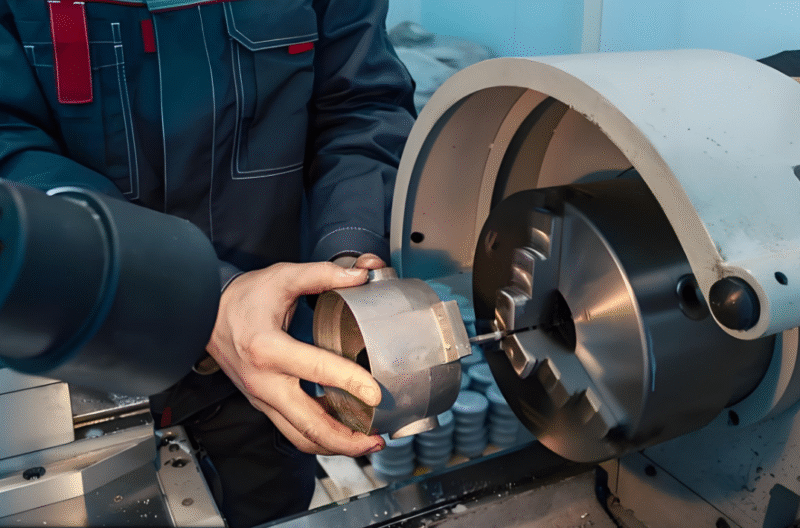
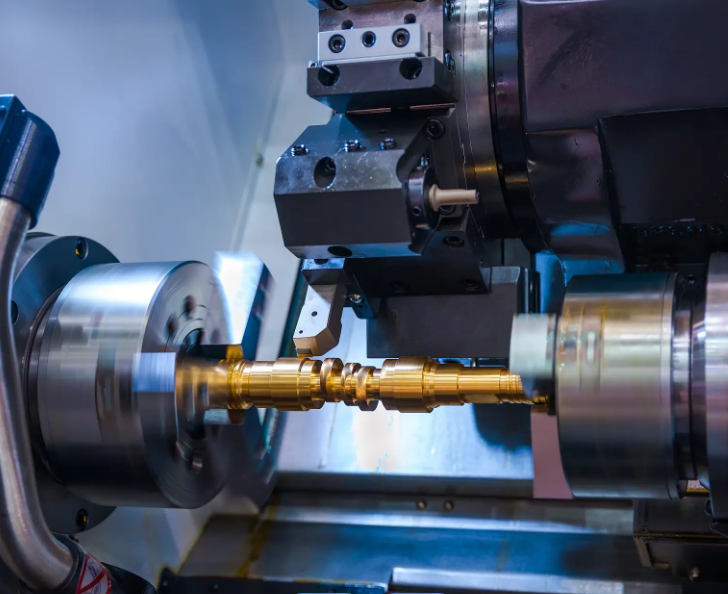
2.CNC rotary disc: the work is turned under the spindle, and the fixed tool cuts in the radius or axis direction. It can be used for cylindrical, conical, and other turn-around parts. Typical applications: Shafts, nets, jets, flanges.
3.CNC Manipulator Centres: "アップグレードされたフライス盤 "とみなすことができ、Often, automatic ツールチェンジャー and ツールマガジン are equipped with a CNC フライス盤を指す. Flies, drells, revolvers, tapering, and other specifications; all of which are performed with high efficiency in a single operation.
4.Multi-axis CNC machine: For example, 5-axis machine centre, 3 linear axes are added, 2 rotary axes are used to move tools and workpieces. In this way, it is possible to process objects with appliance in the direction of bora-yuru, to process complex shapes with jogging and cycling, and to process complex shapes, such as aerospace blades, industrial pylons, and hybrid medical machines, which are the most suitable parts for manufacturing.
5. Other special CNC machines: for example, CNC electrical discharge machine (EDM), CNC laser cutter, CNC grinding discs, and so on.
Core Benefits of CNC Numerical Control Machining
The CNC mesh is selected for its accuracy, efficiency, and flexibility in the manufacture of sorries:
1. Precision and consistency: CNC Machine is capable of making positional decisions with a precision of 0.001mm in the Mikron unit. The first time the program is inspected, 24 hours a day, and thousands of patches are produced, and quality control is not possible without the help of the Hi-Man Elite.
2. The ability to deal with very complicated shapes: With multi-axis Link and high CAMソフトウェア, CNC is able to deal with complicated shapes and structures easily by manual work or by machines that are not possible in practice.
3. Superior reproducibility and extensibility: The digitalisation of the prototype can be preserved, exported and optimised in cases where 10 prototypes or 100,000 parts are produced, and where the same prototype is exported, the absolute consistency of the entire product range is ensured, and the prototype can be continuously produced from a single prototype to another. This ensures the absolute consistency of the entire production process, and enables the transfer of symmetry from a continuous production process to the production of the product.
4. Improvement of productivity and safety: In automated continuous operation, the time for exchange of centertip and tools is shortened (especially in the case of the Maxignan Centre), and the operation in the thin darkness of the "light elimination workshop" is possible. At the same time, the safety of production has been greatly improved by cutting the oparettes in a far away place.
5. Optimisation of material utilisation and container management: Intelligent planning can reduce the use of materials to a minimum. The initial investment in equipment and planning is high, but for medium to large scale production, one atari's cartridge is too large, and the amount of scrimping and re-processing is reduced to optimise the total cost of ownership in the long term.
Conclusion
CNC Manipulator is a modern manufacturing technology that is based on automation, design and physical worlds. We understand the various types and benefits of these technologies, and make decisions based on a wide range of information for product development and manufacturing engineering. Whenever necessary for the trial production of precision parts or the planning of mass production, CNC technology is provided to provide efficient software that can be reliably used.
 Chinese
  Japanese
  English
  German
  Finnish
暂无评论内容