
Rebett Solventing SolventingDissolving Technology: A Solution for the Modern Manufacturing Industry
In the invariable metal connection, the fibre optic solution between material science and fluid dynamics has been developed.
The joining technology in the manufacturing industry has been described as two different processes, namely, rebate joining and dissolution joining, and has been seen as an alternative. Today's state-of-the-art manufacturing industries are forming synergies with dissolution and conceptualisation of unrelated technologies at first sight. This is a redefinition of the method of joining and separating materials by combining them across national boundaries.
Rebate Dissolving: The Impossibility of Taking Outside and the Possibility of Taking Outside of the Perfect Baranas
Rebate bonding is a combination of a composite bonding programme and a clever combination of the strength of the bond and the flexibility of the rebate. In practice, the high strength and airtightness of the bonded joints-1 are maintained, while the concentration of the stress is dispersed through the use of the rebate elements, and the fatigue life of the joints is improved-6.
The Aluminium alloy joining, the friction welding plan with its own through friction on the side of the sheet, has proved the advantage of this matching effect. The material is softened by frictional heat generation by using the high speed turnaround half-hollow robot to form the mechanical-solid phase composite joint-3 by the use of this Prose, and the heat bonded Prose reduces the deformation of the printer in the joint, and the material between the top and the bottom of the printer is reduced by the thermal bonding. It is possible to form a metallurgical bond between the materials in the pant under the action of heat-3.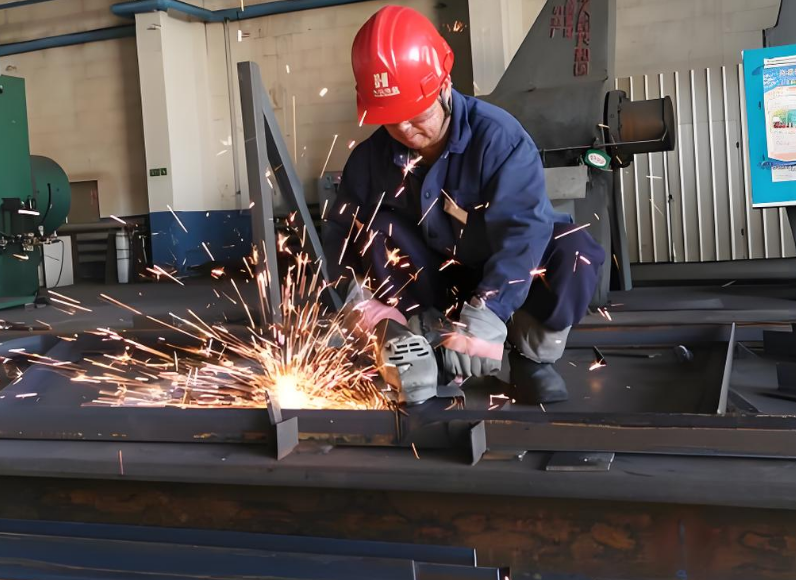
Dissolution Technology: Separation and Continuous Processing of Anticipatory Energetic Bridges
The application of dissolution technology in the manufacturing industry has resulted in the separation of materials and resilience. It is very important to understand the solubility of the metals to be dissolved in the dissolution process, and it is also important to decide on the formation of an alloy of 2 metals in a positive composition-7.
For example, インジウム (In) or スズ (Sn) with a different speed from that of copper (Cu), BiPb, a part of the alloy, or copper metallic oxide, is fully diffused -7.7. 7.
Application of Rebett Solubilisation and Dissolution in the vicinity of each other
1. Polymers - Metal Composite Connections
In the case of metal bonding of plastics, the dissolution technology has its own value. For example, the dissolution technology of polyschline is to dissolve the 廃プラスチック, heat it up, dehydrate it, extrude it, and recover the polyschline petroleum in a pore. 9 This kind of dissolution process has the effect of deteriorating the quality of the polyschline material when the temperature of the reaction is low.
2. Application of high efficiency dissolution programme for pre-treatment of joints.
The efficient dissolution process developed in the Bohai Oilfield is based on the condition that the dissolution time of the polymers is controlled by about 40 minutes, and the joining of the Prospect-4 is carried out after that time. The program has been optimised for 3 stages of dissolution, with a significant reduction in the amount of Plateforms and Spaces occupied by the Dissolution System-4.
Future Prospects: Crossing National Borders and Unified Technology Florentia
The progress of material science has been accompanied by a close connection between the combination of the Rebreathable bonding and the dissolution technology. In the case of multi-material structures (e.g., Aluminium and Stitch Hairline Repeaters) and heterogeneous material repeaters, a deeper understanding of the behaviour of solubility between materials can directly determine the success of the joining process.
Stamping and Rebonding (SPR) is widely used in the lightweighting design of automobiles as well as in the mechanical cold compression joining of alumi-aluminium and alumi-steel.8 The understanding of the solubility characteristics of dissolved metals in the welding process will help to avoid the defects in the joining and make the joints more reliable. The following is a summary of the results of the study.
Conclusion
The combination of the technology of Rebelt bonding and dissolution is a symbol of the modern manufacturing industry that has moved from the realm of traditional polymerisation to the realm of multidimensional unification. The effect of this border-crossing is that new possibilities for joining and separating materials are opening up, as well as the solution of difficult technological problems in monoprocessing that have existed in the past. In order to maintain a dominant position in the competitive market, it is important to understand the interaction between these two technologies and to maintain an important strategy for the manufacturing industry in order to optimise technological innovations and processes.
 Chinese
  Japanese
  English
  German
  Finnish
Leave a Reply
You must be logged in to post a comment.