
working (of machinery)Flatbed Machining and Grinding: Concrete Technology and Innovation in Modern Manufacturing Industry
Cutting and flux processing technology is the foundation of modern industrial manufacturing, from automotive electronics to aerospace precision components, and from medical equipment to intermediate and core components of injection moulding machines.
In the world's manufacturing industry, the most basic machining method, cutting, and high efficiency and high precision combined with the use of the Flatbed and Grinding technology are working together to advance the accuracy and efficiency of product manufacturing by leaps and bounds in various industries in the wave of Intellectual Property Rights (IPR). Understanding the core principles, advantages, and synergies of these two technologies is a key to optimising manufacturing processes and strengthening the market competitiveness of manufacturing companies.
Fundamentals of cooperation: World language in Monozukuri
Cutting and machining is the process of removing the remaining material from the surface of a workpiece by using the regular shape of the tool, and the shape, accuracy, surface roughness, and quality of the surface layer are the design elements of the machining method. The basic conditions of cutting tool, cutting material, cutting action and so on are necessary for all three types of cutting processes.
The cutting is classified by the following types of tools for the movement of the tool and the shape of the tool:
Rotary disc machining: Mainly for spinning parts, such as surfaces, discs, and centers.
Flip-flop machining: The multi-flute cutter (Flip-flop cutter) can be used to machine flat surfaces, grooves, and complex profiles.
Smoothing: The purpose of smoothing the surface of a workpiece by means of a reciprocating motion of a straight line between the tool and the workpiece.
Grinding: The surface of the workpiece is machined at high linear speeds with high precision and low surface roughness using stones and other abrasives.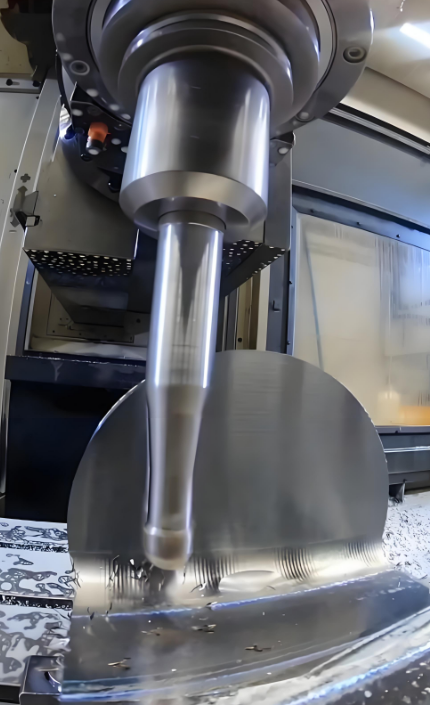
Drehl, Revolver: Mainly used in cave processing and spatial processing.
Machining is divided into the stages of barren, intermediate, super, super and ultra-precision machining in terms of material removal rate and machining accuracy. With the absolute development of machine tools and cutting tools, the accuracy, efficiency, and automation of cutting processes have increased absolutely, and the range of applications has been expanded.
Analysis of Flatbed Machining and Grinding: Innovations in the Integration of Efficiency and Precision
The combination of processing and grinding is an organic and innovative application of processing and grinding. The efficient material removal capability of the raw material and the smooth surface quality of the grinding are both included, and a unique combination of machining solids is created.
Core Functions of Flow Processing
Flatbed machining is a method of machining that involves turning a multi-flute tool to cut the object being machined. Flatbed Machining
Motion: The turning motion of the tool is the main motion, and the workpiece in the direction of the main motion is sent in a straight line motion of the tool.
Cutting Characteristics: The use of multi-edge cutting tools ensures that the processing of raw materials is characterised by multi-edge cutting, continuous cutting, good cooling efficiency and high processing efficiency.
Uses: Flat machining is mainly used for machining flat surfaces, inclined surfaces, shaped surfaces, grooves and so on.
Grinding Technology
Grinding is a method of machining the surface of the workpiece at high line speeds using stones and other abrasives. Its major advantages are as follows:
High Precision Capability: High precision grinding with very small surface roughness is possible, and the machining accuracy is IT3-IT7.
For hard materials: Grinding discs make it possible to machine hard materials such as hardened steel and super-hard alloys.
Superior Surface Quality: The surface of many precision parts and functional surfaces is the main element in the machining process, and the surface is very smooth.
Comparative Efficiency of Powder Excavation and Grinding by Combined Measures
Powder manufacturing and powder砕 processes are organically combined and complement each other:
Prospect consolidation: Reduction of the number of work cycles and machine changeover time, and improvement of overall processing efficiency.
Optimisation of quality: barrelling and intermediate machining and finishing of the finish to remove material early. Pitch and finish machining ensures ultimate precision and surface quality.
Concrete management: We optimise our processes and reduce the number of single-unit processed controllers and workers.
Comprehensive Comparison of Flatbed Machining and Grinding Machines
The following table compares the main features of the two machining methods, namely, flues machining, grinding and chipping, and the most appropriate selection for a particular size:
Comparison of the inch method Flat machining Research machining
Processing method Flatware machining of workpieces with high speed turning stone.
Machining accuracy Precision Clasps IT6-IT12, Roughness is below Grained Precision Clasps IT3-IT7, High precision grinding of small surface roughness is possible.
Machining rate Machining speed is fast, material removal rate is high Machining speed is 遅い, high-capacity grinding, for example, Pawel grinding, is possible.
Applicable materials Widely applicable to the processing of high-hardness materials, such as hardened steel and super hard alloys.
Surface quality Large surface roughness Very smooth surface is available
Comparatively low cost and wide applicability of the equipment, especially in the case of high precision grinding discs.
Representative applications Flat surfaces, grooves, and complex profiles High-precision surfaces, machining of hard materials, and precision parts.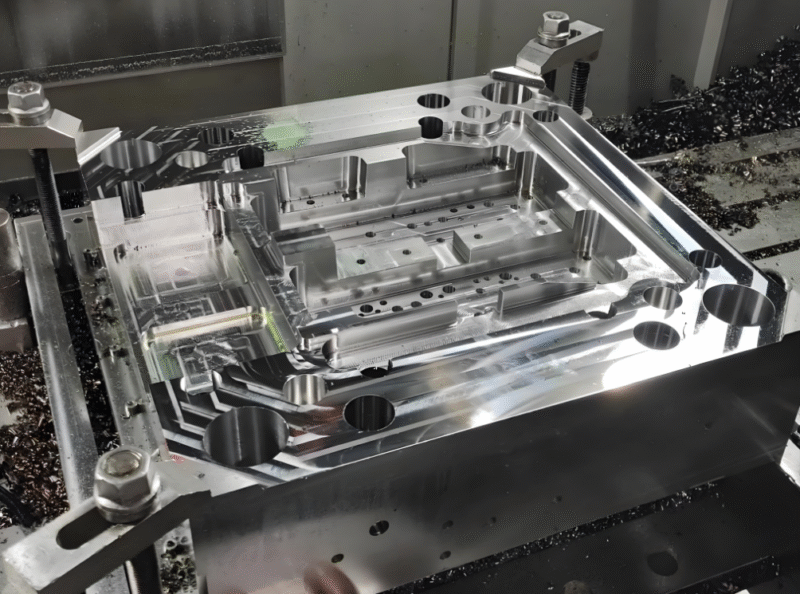
Applicable Examples of Cutting and Flatbed Machining
aerospace
Cutting and flue machining are important in the aerospace industry where high precision, high reliability and light weight are required:
Engineered parts: Turbines, engineered caissons, and other major parts are usually manufactured by combining 5-axis flute machining and precision machining.
Structural parts: Structural parts of aircrafts are roughly machined by high-speed flues in many cases, and then precision machining is performed to ensure the accuracy of important joint surfaces.
Automobile Manufacturing
The automobile manufacturing industry is one of the widest areas where cutting and machining technologies are used:
Dynamic assembly: The main parts such as engine block, sealant head, and clanker are used for high-speed processing and precision machining.
Trainsmith: The parts of gallery boxes, hounds and giants are based on the combination of processing and machining.
Medical Equipment Manufacturing
Medical devices have high requirements for physical suitability, surface quality, and accuracy:
Implants: Implants for artificial joints and bone sphincters are usually formed by precision processing of flowers, and the necessary surface quality is obtained by grinding and lapping.
Surgical Instruments: Microfabrication and grinding technologies are widely used in the manufacture of precision surgical instruments.
Gold Manufacturing Division
The gold-type industry is an important area for the application of processing and machining technology in the form of flowers:
Vertical machining: Gold-type vertical machining is usually performed by roughing and semi-machining with high-speed flues, and then precision machining is performed to achieve the final size and surface elements.
High-gloss surfaces: Precision grinding and milling are important processes in order to achieve mirror-like results.
Technical Trends and Information on Flatbed Machining and Grinding Technology
Composite Processing Technology
Complex Magnetic Centres' flues machining and grinding have been integrated with the rapid development of high-end manufacturing equipment in recent years, which has led to a significant increase in machining accuracy and productivity, as well as the achievement of a comprehensive range of processing and machining capabilities.
Inteniente, tecnologia, inebriete
In conjunction with INDUSTRY 4.0 and the advancement of smoothing and manicuring, there has been a new shift in the technology of processing and machining of raw materials:
Adaptive machining: The machining parameter is automatically adjusted to the wear of the tool and the change of material, and the system is based on a laser centre system.
Digital Signature: Process engineering digital signage, optimisation of processing parameter in a virtual environment, and reduction of trial and error costs.
Intelligent monitoring: Processing status monitoring system for human-awareness devices, identification of abnormal relay systems, and automatic adjustment.
Innovations in tools and materials
Advances in tooling technology and materials have contributed directly to the expansion of the limits of the range of flute machining and machining:
Super-hard tool materials: PCD, CBN, and other super-hard tool materials are widely used, and high-speed ミリング of hard materials is possible.
Conveying technology: The new Nanocoating technology has dramatically increased tool life and machining efficiency.
Stainless steel tools: Specialised tools for specific materials and processes to optimise processing results.
Options and Options for Appropriate Processing Strategies
In the process of machining, it is important to select a cutting and machining strategy in a scientific manner:
Selection of material characteristics
General steel and non-ferrous metals: High energy efficiency and superior coasters are preferred for processing of films.
Hardened steel and superhard alloys: Grinding is an essential part of HDM technology.
Composite materials and difficult-to-cut materials: Special tools and proxies/plummers are necessary for selecting specific material characteristics.
Determination of the meaning of the base on the precision element.
General Precision Requirements (IT7 or higher): Priority is given to Precision Flatbed Machining.
High precision requirements (IT5-IT7): Grinding, and the combination of flute machining and grinding are necessary.
Ultra-high-precision components (IT3-IT5): Precision grinding, lapping, lapping and other methods are used.
Study on the basis of the production logos
Small quantities of one part: CNC processing with soft ploughing and short preparation time is preferred.
Medium: To respond to the requirement of accuracy, the processing of the flange is selected by the grinding process.
Mass production: Special production labs are used to optimise the overall efficiency by integrating the process of powder crushing and grinding.
With the absolute development of new materials, new technologies, and knowledge-based technologies, cutting technologies have been evolving in the direction of efficiency, precision, knowledge, and environmental excellence. In relation to the size of the enterprise, the tendency of the development of cutting technology is grasped, and the rational use of the innovation programme of the processing of flowers and the grinding process is the first opportunity of the industrial revolution to take advantage of it.
The selection of highly sophisticated powder processing and drying equipment, extensive experience, and technological facilities is an important decision for companies to ensure the quality of their products and the competitiveness of the services they provide in the marketplace.
 Chinese
  Japanese
  English
  German
  Finnish
Leave a Reply
You must be logged in to post a comment.