

Power system components
Engine components:
Cylinder block/cylinder head: The material is primarily cast iron or aluminium alloy, requiring high dimensional stability and precision of sealing surfaces.
Crankshaft/Camshaft: Materials with high fatigue strength, roundness, coaxiality, and surface hardness must be strictly controlled.
Connecting rod: Extremely high symmetry requirements, with weight grouping accuracy within ±2 grams.
Transmission components:
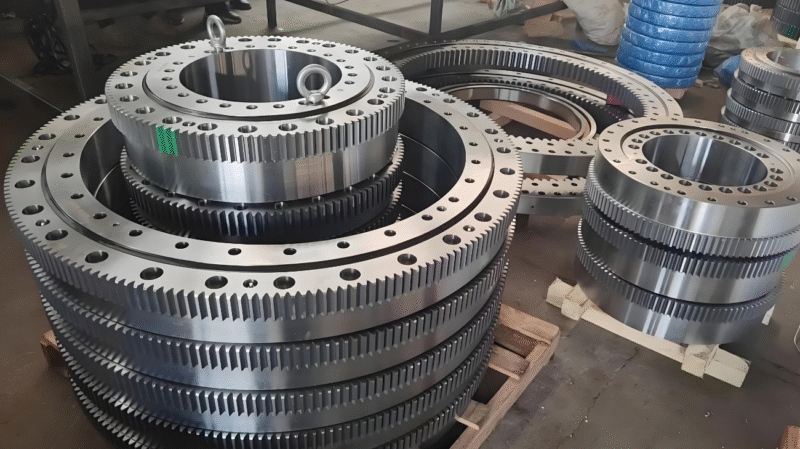
Gear:Accuracy class ISO 6-8The key to noise control
Enclosure: Complex internal cavity machining, multi-axis synchronisation requirements
Clutch components: Special treatment of friction surfaces
Chassis and Suspension System
Steering knuckle: Safety component, 100% non-destructive testing
Brake discs: Heat dissipation performance and dynamic balance are equally important.
Control arm: a combined process of welding and machining
Body and interior components
Mould manufacturing: Precision of large moulds: 0.02/1000mm
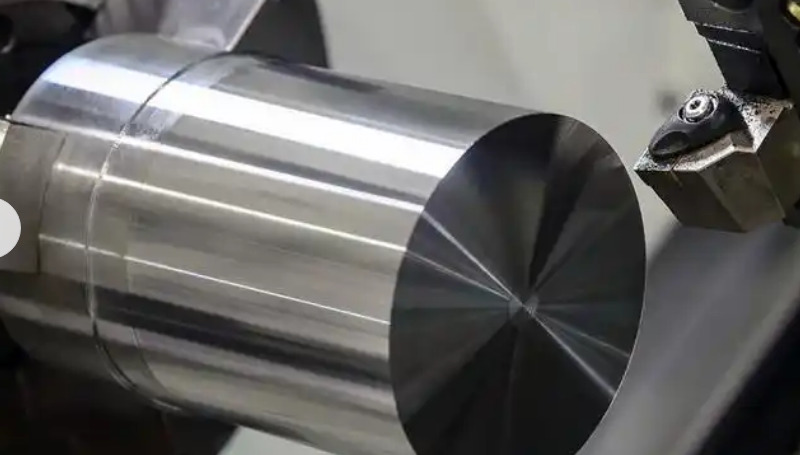
Decorative components: Consistency in mirror finish and texture![图片[1]-汽车零部件分类与加工要求-大连富泓机械有限公司](https://cndlfh.com/wp-content/uploads/2025/12/QQ20251102-193846-1.png)
Part Two: Detailed Explanation of Core Machining Technology and Equipment
1. High-speed machining technology(HSM)
Technical characteristics:
Spindle speed: 15,000–40,000 RPM
High feed rate (10–50 m/min)
Shallow cutting, high feed rate strategy
Applications in automobile manufacturing:
Machining of intake and exhaust ports on aluminium alloy cylinder heads
High-efficiency rough machining of mould cavities
Composite material component machining
Representative equipment:
DMG DMU Series 5-Axis Machining Centres
MAZAK FF Series High-Speed Machine Tools
Equipped with HSK-A63 or CAPTO shank
2. Multi-tasking machining technology
Turning and machining operations:
Complete turning, milling, drilling and tapping operations on a single machine
Reduce the number of clamping operations and enhance positioning accuracy.
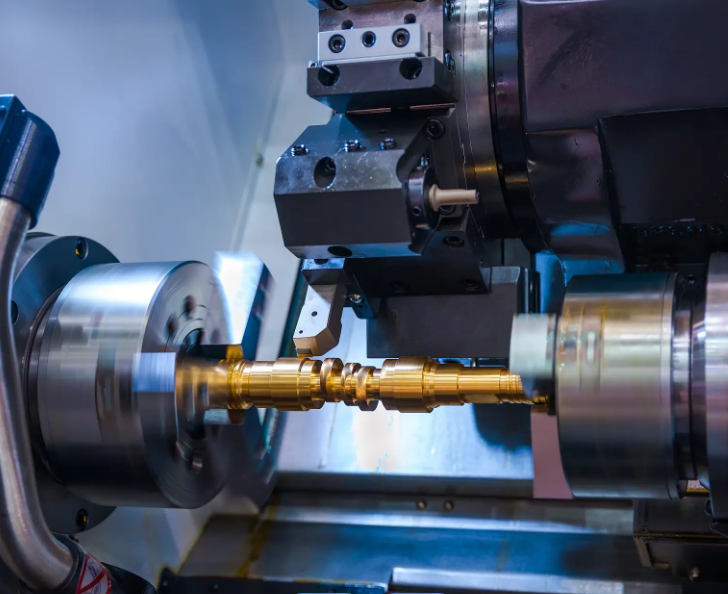
Swiss-type turning and milling machining centres are employed for the machining of precision shaft components.
Example: Machining of the transmission output shaft
Traditional craftsmanship: Six pieces of equipment, eight clamping operations
Multi-tasking machining: Two clamping operations on a single machine
Effect: Machining time reduced by 65%, precision improved by 30%.
3. Flexible Manufacturing System (FMS)
System Configuration:
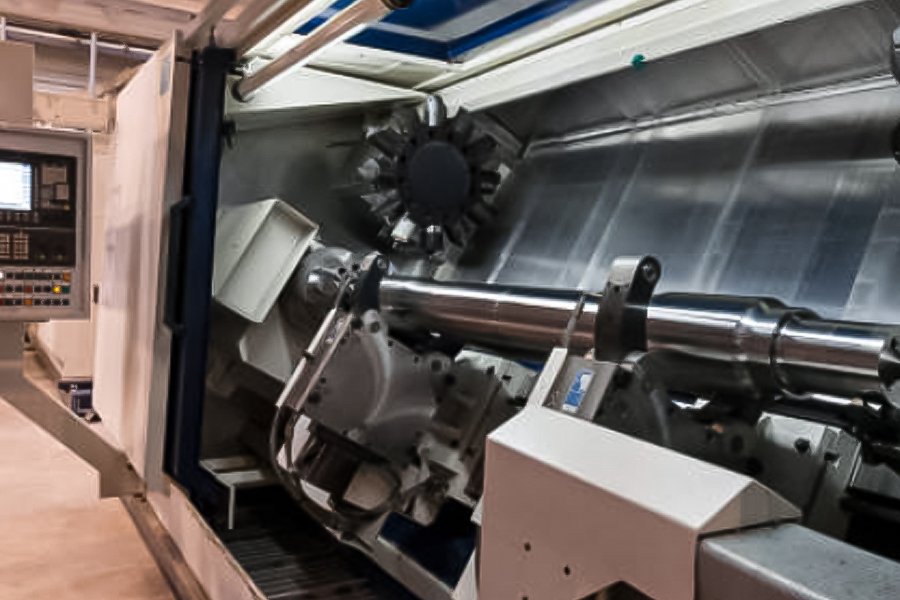
4 to 10 machining centres![图片[2]-汽车零部件分类与加工要求-大连富泓机械有限公司](https://cndlfh.com/wp-content/uploads/2025/10/QQ20251002-202038-800x562.png)
Automatic Pallet Change System (APC)
Central Tool Magazine (120–400 tools)
Automated logistics system
Application in automotive parts factories:
Multi-variety, small-to-medium batch production
Colline production of engine components
24-hour driverless operation
Investment Return Data:
Initial investment: US$2–5 million
Staff reductions: 50–70%
Equipment utilisation rate: improved from 45% to 85%
Payback period: 2 to 3 years
4. Dedicated machine tools and production lines
Engine block production line:
Processing: Rough machining → Semi-finishing → Finishing → Cleaning → Inspection
Task duration: 3–5 minutes per item
Annual production capacity: 200,000 to 300,000 units
Principal equipment: Dedicated machine tools combined with machining centres
Typical configuration:
Roughing: Three-sided milling machine
Bore machining: Multi-axis drilling and tapping machining centre
Finishing machining: Horizontal machining centre
Online measurement: pneumatic measuring instrument + visual inspection
Part Three: The Transformation of Manufacturing Brought About by New Energy Vehicles
Motor core component machining
Rotor shaft:
Material: Electromagnetic steel laminations + shaft body
Primary requirements: Dynamic balance G2.5 grade, shaft end roundness ≤5μm
Special Engineering: Finishing Operations Following Permanent Magnet Assembly
Stator casing:
Cooling channel machining: Deep cavity machining + Seal testing
Accuracy requirement: Coaxiality of bearing position ≤ 0.01 mm
New Material: Machining of Aluminium-Silicon Alloy Die-Cast Components
Battery system components
Battery tray:
Size: Maximum 2000 × 1500 mm
Material: Aluminium alloy extruded profile
Project: High flatness (0.2/1000 mm), lightweight construction
Solution: 5-axis machining centre + vacuum chuck + deformation correction algorithm
Module end plate:
Lot: in millions
Process: Press forming + precision machining composite
Efficiency requirement: Single-item processing time ≤ 45 seconds
Part IV: Quality Assurance Systems and Inspection Techniques
Special requirements of the automotive industry
Process Review Criteria:
VDA 6.3 (German Association of the Automotive Industry standard)
IATF 16949 Quality Management System
Customer Specific Requirements (CSR)
Full-size inspection:
Frequency: First-time items + per shift + after changes
Method: Online inspection + offline three-dimensional measurement
Data Management: SPC Real-Time Monitoring
Application of Advanced Inspection Equipment
Online measurement system:
Integrated Probe for Machine Tools: Critical Dimensional Inspection Following Each Process Stage
Laser scanning: Rapid detection of shape tolerances
Visual System: Automatic Identification of Surface Defects
Example: Crankshaft Production Line Inspection Plan:
Online measurement for machining centres: real-time correction of journal diameter
Dedicated measuring machine: Full dimensions + roundness + cylindricity
Comprehensive Measuring Instrument: Dynamic Balance + Bending Degree
Surface roughness tester: Rz ≤ 2 μm control
Part V: Cost Management and Efficiency Improvement Strategies
Optimisation of Tool Management
Characteristics of Tool Consumption in the Automotive Industry:
Tooling costs account for 8 to 15 per cent of manufacturing costs.
The proportion of super-hard tools is 70% or above.
Coating tool utilisation rate: 90%
Measures for cost reduction and efficiency improvement:
Standardisation: Reduction in tool variety by 30–50%
Lifetime Management: From Fixed Lifetimes to Monitoring-Based Replacement
Regrinding plan: Precision tools can be reground 3 to 5 times.
Supplier Management: VMI (Vendor-Managed Inventory)
Pathways to Enhanced Production Efficiency
Improving Overall Equipment Effectiveness (OEE):
Automotive Industry Benchmark: OEE ≥ 85% TP3T
Key improvements: Reducing changeover time, implementing preventive maintenance
Application of Single-Minute Exchange of Dies (SMED):
Standardisation of external operations: Pre-adjustment of jigs
Simplification of internal operations: Hydraulic quick-change system
Target: Replacement time for large components ≤ 15 minutes
Part Six: In-Depth Analysis of Typical Cases
Case Study 1: Upgrading the Engine Cylinder Head Production Line for a German Brand
Background:
Product: 4-cylinder aluminium alloy cylinder head
Annual production volume: 400,000 units
Old production line: Commenced operation in 2010, with insufficient efficiency
Upgrade Plan:
Equipment upgrade: Introduction of eight dual-spindle machining centres
Automation: Robotic material handling + Automated Guided Vehicle logistics
Intelligentisation: Tool life monitoring + adaptive machining
Quality Enhancement: Online Measurement of Critical Dimensions for 100%
Investment and Return:
Total investment: €18 million
Production efficiency: 40% upward
Staff reduction: decreased from 32 to 12 personnel
Quality improvement: Defect rate reduced from 1.21% to 0.31%
ROI: 3.2 years
Example 2: Manufacturing battery trays for new energy vehicle manufacturers
Chirenji:
Size: 1860 × 1450 mm
High precision: Flatness 0.3mm, hole position ±0.05mm
Large production scale: Initial annual output is 150,000 sets.
policy of resolving
Technological innovation:
Monobloc casting + 5-axis precision machining
Vacuum suction fixation minimises deformation
Laser Marking Tracking System
Production Line Design:
Four parallel production lines
Cycle time: 18 minutes per unit
Automation Level: 85%
Quality Management:
Three measurements per component (post-rough machining, post-finish machining, final)
Leak Test 100%
Sampling Inspection Using a Coordinate Measuring Machine 10%
Effect:
Yield rate: 99.211% stable at 3T and above
Cost: 25% lower than the high-speed welding method
Weight reduction: weight reduced by 15%
Example 3: Mass Production of Transmission Gears
Technical challenges:
Accuracy: ISO Grade 6-7
Noise: ≤68 decibels
Consistency: CPK ≥ 1.67
Advanced Process Combination:
Soft machining: Gear grinding/Gear insertion
Heat treatment: carburising and quenching
Hard machining:
Warm gear grinding (high efficiency)
Gear grinding using shaped grinding wheels (high precision)
Tooth face grinding (improvement of surface quality)
Innovative features:
Online measurement closed-loop control
Integration of machining before and after heat treatment
Intelligent Sorting System
Production data:
Single-item processing time: 3.5 minutes
Daily output: 3,500 units
Tool life: 4000 units per grinding operation
Quality costs: accounting for 1.811% of total costs
Part VII: Future Trends and Response Strategies
Trends in Technological Development
Processing technology:
Ultrasonic vibration-assisted machining: Enhancing machining efficiency for hard and brittle materials
Laser hybrid processing: integrated welding, heat treatment and cleaning
Green Manufacturing: Dry Processing / Minimal Lubrication Processing
Development of Equipment:
More electric spindle direct drives
The proliferation of linear motors
Applications of Carbon Fibre Reinforced Structural Components
Business Model Transformation
From manufacturer to solution provider:
Providing comprehensive solutions encompassing parts supply, assembly and inspection
Customer involvement in the initial design phase
Quality Data Sharing Platform
Digital Services:
Remote operation and maintenance Conservative and predictive maintenance
Cloud optimisation of machining parameters
Reducing downtime through virtual debugging
Key Focus Areas for Talent Development
New competency requirements:
Mechatronics adjustment capability
Data analysis and optimisation capabilities
Automation System Integration Capability
Acquisition of new materials and technologies
Proposal for a Training System:
Industry-academia collaboration for targeted corporate talent development
Establishment of an online learning platform
Regularisation of overseas technical exchanges
Conclusion: The Path to Survival and Development for Automotive Parts Manufacturing
The automotive components manufacturing sector is undergoing a once-in-a-century transformation. Demand for traditional internal combustion engine components is declining, while demand for electrified and intelligent components is surging. Successful enterprises will invariably:
Mastering the three balances:
Balancing flexibility and specialisation: Meeting diverse product demands while maintaining cost competitiveness
Balancing Automation and Intelligence: First achieve process automation, then advance intelligent decision-making.
Balancing quality and cost: Ensuring compliance with the automotive industry's stringent quality standards while managing expenditure
Building the Four Core Competencies:
Rapid response capability: Addressing the challenge of accelerated model change
Technology integration capability: Rapidly converting new technologies into productive capacity
Quality Management Capability: Establish a quality system enabling full traceability throughout the entire project.
Cost management capability: Maintaining price competitiveness through lean production and economies of scale
For small and medium-sized component manufacturers, the survival strategy is as follows: select a specific niche segment, pursue excellence within that field, establish deep collaborative relationships with automotive manufacturers, and moderately expand capability boundaries based on specialisation. Conversely, large enterprises are required to build technological platforms and develop multiple technical pathways in parallel.
Regardless of scale, digital transformation is no longer optional but imperative. From digital blueprints to digital factories, from data collection to data-driven decision-making—this journey demands substantial investment, yet the rewards are equally significant. Within the technology-intensive, capital-intensive and labour-intensive automotive industry, only those who sustain continuous innovation will secure the future.

 Chinese
  Japanese
  English
  German
  Finnish
No comments