

How material selection determines the success or failure of processing
あるPrecision MachiningMaterial selection is not merely a cost consideration, but a core factor determining component performance, machining efficiency, and final quality. Aluminium alloys and stainless steels, as the most commonly used metallic materials, each possess distinct physical, chemical, and mechanical properties, imposing entirely different demands on machining processes. This paper delves into the characteristics of these two materials in precision machining, analyses the challenges they present, and provides a practical material selection guide for engineers and procurement decision-makers.
Part One: Comparison of Fundamental Material Properties
Properties and Advantages of Aluminium Alloys
Aluminium alloys are widely utilised in the aerospace, automotive manufacturing, and electronics industries due to their unique combination of properties:
Physical properties:
-
Low density (approximately 2.7 g/cm³), being only one-third that of steel
-
High thermal conductivity (approximately 150–240 W/m·K), superior to most metals
-
High thermal expansion coefficient (approximately 23 × 10⁻⁶/K)
-
Non-magnetic material, suitable for specific electromagnetic environments
Mechanical characteristics:
-
High specific strength, with superior strength performance per unit weight
-
Highly ductile and readily formable
-
Its elastic modulus is low (approximately 69 GPa), being about one-third that of steel.
![图片[1]-铝合金 vs 不锈钢 – 不同金属材料在精密机械加工中的特性与挑战-大连富泓机械有限公司](https://cndlfh.com/wp-content/uploads/2025/12/QQ20251102-193512.png)
Processing characteristics:
-
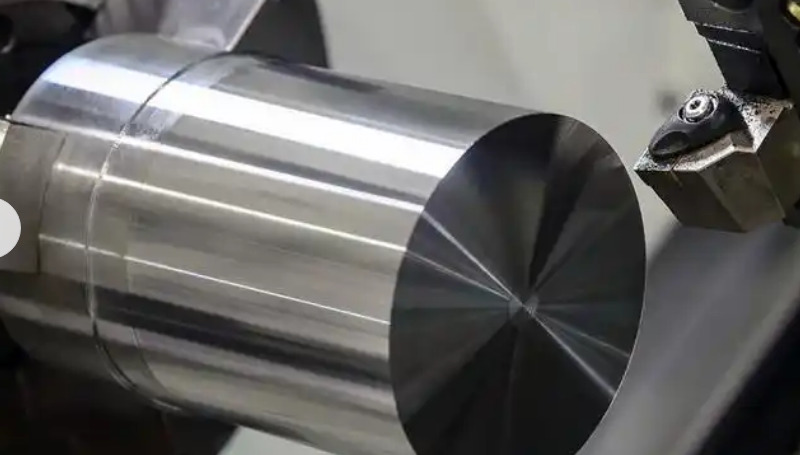
Cutting forces are low, and tool wear is relatively minimal.
-
Smooth chip evacuation enables high-speed machining
-
A wide range of surface treatment options (anodising, plating, etc.)
Properties and Advantages of Stainless Steel
Stainless steel is a type of ferrous alloy whose corrosion resistance and strength render it indispensable in medical equipment, chemical plant installations, and food processing machinery.
Physical properties:
-
High density (approximately 7.8–8.0 g/cm³)
-
Low thermal conductivity (approximately 15–20 W/m·K), being merely one-tenth that of aluminium.
-
The coefficient of thermal expansion is moderate (approximately 17 × 10⁻⁶/K).
-
Possesses magnetic properties (depending on specific grade)
Mechanical characteristics:
-
High strength, particularly high yield strength and tensile strength
-
A wide range of hardness, from soft austenite to hardened martensite
-
High elastic modulus (approximately 190–210 GPa)
Corrosion resistance:
-
The chromium content is at least 10.51%, forming a passivating protective film.
-
Excellent resistance to acids and alkalis, and high-temperature acidification
Part Two: Specific Manifestations in Precision Machining
Processing Characteristics of Aluminium Alloys
Strengths:
-
High-speed machining capabilityAluminium alloys enable higher spindle speeds and feed rates.
-
Superior surface quality: Easily achieves a mirror-like finish, with surface roughness reaching Ra 0.1 μm.
-
Advantages of thin-cut meat processingApplicable for precision machining of thin-walled components such as aerospace structural parts.
Issues and Countermeasures:
-
Prone to developing varicellaSticky swarf tends to adhere to tools, necessitating the use of sharp cutting edges and appropriate coatings.
-
Thermal Deformation ControlThermal conductivity is favourable, but due to its high coefficient of thermal expansion, processing temperatures must be strictly controlled.
-
Surface damage to soft materialsDue to the susceptibility to injury, optimisation of fixation methods and surface protection is required.
Processing characteristics of stainless steel
Strengths:
-
Good dimensional stability:The coefficient of thermal expansion is relatively low, and the effect of temperature is minimal.
-
Control of work hardening is possibleAppropriate engineering measures can prevent excessive hardening.
-
The final surface quality remains consistent.Wear resistance and surface properties are maintained over the long term.
Issues and Countermeasures:
-
Cutting force is highHigh-rigidity machine tools and specialised tool geometries must be employed.
-
Poor thermal conductivityCutting heat concentrates at the interface between the tool and the chips, necessitating enhanced cooling.
-
Tool wear is excessiveCrescent-shaped wear grooves are prone to develop, necessitating the use of tools with wear-resistant coatings.
Part Three: Comparison of Processing Parameters
Differences in cutting parameters
| parameters | Aluminium alloy (6061-T6) | Stainless steel (304) | Points to Note |
|---|---|---|---|
| Cutting speed (m/min) | 200-1000 | 50-150 | Aluminium permits high-speed machining, whereas stainless steel requires careful machining. |
| Feed rate (mm/revolution) | 0.1-0.5 | 0.05-0.25 | Stainless steel must be machined with a small feed rate to prevent excessive hardening. |
| Cutting depth (mm) | 0.5-10 | 0.2-3 | Stainless steel requires a moderate cutting depth and should avoid friction. |
| Tools and Materials | PCD/Diamond Optimum | Superhard alloy/Ceramic | For aluminium, employ a sharp cutting edge; for stainless steel, utilise wear-resistant materials. |
Coolant Selection Strategy
Aluminium alloy processing:
-
The use of water-soluble coolant is recommended.
-
Avoid chlorine-containing coolants to prevent stress corrosion cracking.
-
High-concentration coolant aids in the removal of swarf.
Stainless steel processing:
-
The use of extreme pressure (EP) additives is required.
-
High-lubricity coolant reduces friction.
-
Allow to cool sufficiently to prevent thermal deformation.
Part IV: Key Aspects of Quality Management and Inspection
Inspection Points for Aluminium Alloy Components
-
Dimensional accuracyFocusing on dimensional changes due to thermal deformation
-
Surface integrityInspection for fine cracks and surface scorching
-
Quality of anodising treatmentEnsure the cleanliness of the pre-treatment process to prevent spotting.
-
Residual stressStress distribution in thin-walled components
Key Points for Inspecting Stainless Steel Components
-
work-hardened layerMeasure changes in surface hardness
-
Corrosion Resistance VerificationSalt spray test or chemical test
-
Magnetic inspection(Where applicable): To ensure compliance with design requirements.
-
Surface contaminationPreventing the occurrence of rust caused by iron ion contamination
Part Five: Application Scenarios and Material Selection Guide
Optimal applications for aluminium alloys
-
There is a high demand for weight reduction.Aerospace and new energy vehicle structural components
-
Applications sensitive to heat releaseElectronic equipment enclosures, heat sinks
-
High-speed moving partsRobotic arm tip, moving parts of automated equipment
-
Exterior trimConsumer electronics requiring anodic colouring
Stainless steel is the optimal choice in the following situations
-
corrosive environmentChemical industry equipment, marine environment, medical devices
-
High-strength requirementsLoad-bearing structures, fastening components, tools
-
High-temperature applicationsEngine components, heat exchangers
-
Hygiene requirementsFood processing equipment, pharmaceutical machinery
![图片[2]-铝合金 vs 不锈钢 – 不同金属材料在精密机械加工中的特性与挑战-大连富泓机械有限公司](https://cndlfh.com/wp-content/uploads/2025/12/QQ20251102-193739-1.png)
Part Six: Comprehensive Analysis of Cost-Effectiveness
Direct Cost Comparison
-
Material costsAluminium alloys typically experience significant price fluctuations, whereas stainless steel remains relatively stable.
-
processing costsThe machining efficiency of aluminium alloys is high, yielding a substantial output per unit of time.
-
Tooling costsThe tools for stainless steel processing wear out quickly.
-
Energy consumption costsThe processing of aluminium alloys consumes less energy.
Total Life Cycle Cost
The following factors shall be considered:
-
Aluminium alloys may require additional anti-corrosion treatment.
-
The maintenance costs for stainless steel are relatively low.
-
Aluminium alloys possess high recycling value.
-
The lifespan of stainless steel is longer than usual.
Part VII: Emerging Trends and Material Development
Directions for Innovation in Aluminium Alloys
-
High-strength aluminium alloyThe 7xxx series enhances strength while maintaining machinability.
-
Aluminium-based composite materials: Reinforce wear resistance by adding ceramic particles
-
Superplastic aluminium alloyApplicable to precision moulding of complex shapes
Technological Advancements in Stainless Steel
-
High-machinability stainless steel: Addition of elements such as sulphur and selenium to improve workability
-
Two-phase stainless steelIt combines the advantages of both austenite and ferrite.
-
Nano-structured stainless steelObtaining an ultra-fine crystalline grain structure through special processing
Conclusion: The Art of Balancing Wise Choices
The choice between aluminium alloys and stainless steel is never a simple matter of 'which is superior', but rather 'which is more suitable'. Aluminium alloys are unrivalled in weight reduction and machining efficiency, whilst stainless steel demonstrates unique properties in terms of strength and corrosion resistance. Success in precision machining hinges upon a profound understanding of each material's properties, enabling the optimisation of the entire machining chain—from tool selection and parameter setting to quality control.
In the future, as advances in materials science and processing technology unfold, both materials will evolve towards superior workability and enhanced overall performance. Discerning engineers will identify the optimal balance between aluminium alloys' lightweight properties and efficiency, and stainless steel's robustness and durability, based on specific application requirements and considering lifecycle costs.
For manufacturing enterprises, establishing specialised processing units dedicated to different materials and cultivating process engineers with deep expertise in specific materials are key to gaining a competitive edge. Ultimately, in the precision machining sector, profound material knowledge often proves more crucial than advanced equipment.

 Chinese
  Japanese
  English
  German
  Finnish
No comments