

Repair welding——Technology to 'revive' machinery
Throughout the extended lifecycle of mechanical equipment, wear, corrosion, fatigue cracks, and even unexpected damage are unavoidable. Direct replacement of entire machines or large components is often prohibitively costly and time-consuming. In such instances, advanced rivet welding repair and modification techniques prove pivotal for restoring equipment performance, extending service life, and even achieving functional upgrades. Unlike new manufacturing, repair welding confronts unique challenges including material uncertainty, structural constraints, and demanding on-site conditions. This guide systematically organises rivet welding methods commonly employed in machinery repairs, combining them with practical case studies to provide effective implementation strategies.
Part One: Core Issues in Repair Welding and Principles of Pre-Treatment
Four Core Issues
The weldability of the material is unknown: older equipment may utilise obsolete steel grades, which typically exhibit high carbon equivalent and poor weldability.
High restraint stress: Localised repairs prevent thermal stresses from being freely released, making cracking more likely to occur.
Complete elimination of defects: Unless crack ends and fatigue sources are entirely removed, recurrence is inevitable even after repair.
Deformation control: In welding operations on assembled precision equipment, extremely stringent requirements are imposed on deformation control.
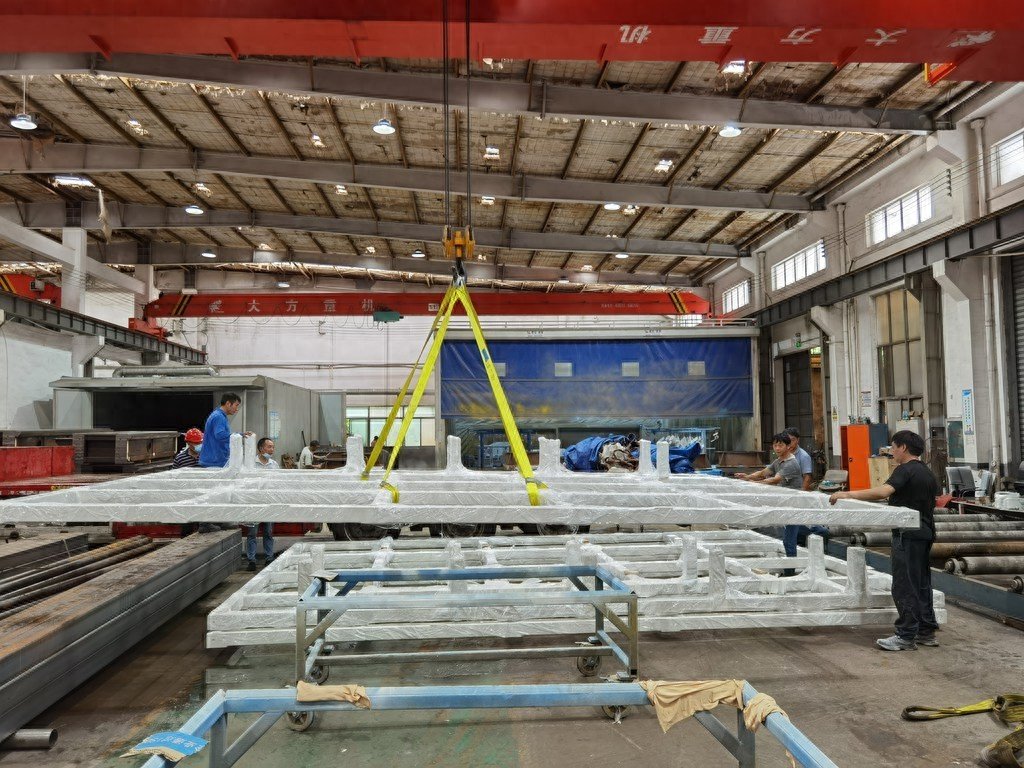
The Four-Stage Diagnostic Method Prior to Repair“![图片[1]-機械設備の修理・改造における一般的なリベット溶接加工方法と事例-大連富泓機械有限公司](https://jpdlfh.com/wp-content/uploads/2025/12/QQ20251230-190956.png)
Step 1: Investigation of History and Operational Status: Assess the equipment's operating environment (load, temperature, medium) and determine the damage progression.
Step 2: Material Identification: Conduct on-site material analysis using a spectrometer to determine the composition of the base material.
Step 3: Precision Defect Investigation: Employ dye penetrant testing (PT) and ultrasonic testing (UT) to determine the orientation and depth of cracks.
Step 4: Formulating the Repair Plan: Based on the above information, select the welding method and welding materials, and establish the welding sequence and heat treatment plan.
Part Two: Detailed Explanation of Six Common Repair Welding Methods
Shielded Metal Arc Welding (SMAW)
Suitable scenarios: On-site emergency repairs, confined spaces, thick and large components.
Key points of technique:
Selection of welding rods: For unknown steel grades, choose alkaline low-hydrogen welding rods (e.g., J507). These exhibit favourable metallurgical properties and excellent crack resistance.
Key processing points: Employ low-current, narrow-width welding with intermittent spot welding to minimise heat input and residual stresses. For extended cracks, weld from both ends towards the centre.
Case Study: A 300mm-long crack developed in the frame of a large mining crusher. Using J507 welding rod, a U-shaped bead was formed, followed by preheating to 120°C and segmented annealing welding. Post-welding, the joint was held at temperature for controlled cooling. The repaired component has operated without incident to date.
Gas-shielded welding (GMAW/MAG & GTAW/TIG)
GMAW (MIG/MAG): Suitable for rapid repairs on medium-to-thick steel plates and stainless steel. Solid wire offers high efficiency, whilst flux-cored arc welding (FCAW) wire produces minimal spatter and excellent formability, making it more suitable for repair work.
GTAW (TIG): Suitable for repairing precision components, thin-walled parts, dissimilar steels, and aluminium/titanium alloys. Concentrates heat and minimises distortion.
Case Study: Repair of surface corrosion pits on a paper-making drying drum. Employing a TIG cold welding process (extremely low heat input), build-up welding was performed via spot welding using a suitable welding material. Post-repair, grinding machining restored both dimensional accuracy and surface roughness, thereby avoiding the need for complete replacement of the drying drum.
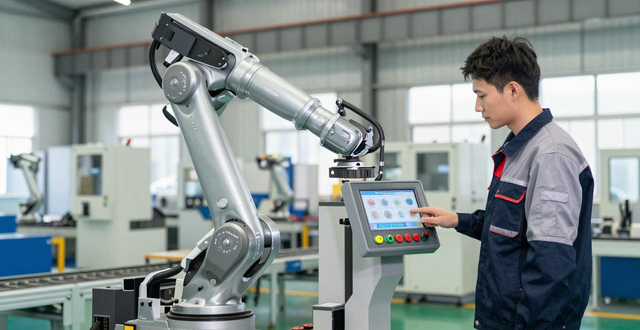
Oxygen-acetylene welding (OFW) and brazing![图片[2]-機械設備の修理・改造における一般的なリベット溶接加工方法と事例-大連富泓機械有限公司](https://jpdlfh.com/wp-content/uploads/2025/12/QQ20251230-190904.png)
Suitable applications: Repair of cast iron components, thin-walled pipe components, and small parts sensitive to heat input.
Technical points: Adjust the flame to a neutral flame or a flame with slight carbonisation. For welding repairs on cast iron, either preheat the entire section to 600–700°C (hot welding) or employ cold welding using nickel-based welding rods.
Case Study: Partial damage occurred to the cast iron guide rails of an antique machine tool. Oxy-acetylene welding was employed using a cast iron welding rod. Following welding, the component was cooled in a holding furnace. Precision was restored through scraping after the repair.
Filler Metal Welding and Surface Repair
Purpose: To restore dimensions and impart special properties such as wear resistance and corrosion resistance to the surface.
Methods: Manual arc build-up welding, flux-cored wire self-shielded build-up welding, plasma arc build-up welding (PAW).
Case Study: Roll wear in vertical mills at cement plants. Automatic build-up welding was performed using self-shielded flux-cored wire. The welding material employed a high-chromium cast iron series, achieving a post-repair wear resistance lifespan exceeding 90% of new rolls while keeping costs below 30% of new purchases.
Cold welding and joining process
Cold welding (no heat input): Utilising polymer composites (such as metal repair compounds) or micro-arc welding equipment, this method is suitable for repairing casting defects or leaks without risk of deformation.
Chamfering (mechanical reinforcement): For cracks in load-bearing sections, a 'wave-shaped key' or 'reinforcement block' is machined and fitted during welding to provide both repair and mechanical locking, significantly enhancing the restored strength.
On-site machining and online restoration technology
Online cutting/bevel machining: Utilising portable milling equipment to machine weld bevels at the installation site of the equipment.
Narrow-gap welding: By forming a narrow, deep weld bead on thick-walled components (such as large shafts), this technique significantly reduces weld volume and deformation.
Part Three: Comprehensive Analysis of a Typical Repair Case
Case Study: Repair of Severe Surface Scratches on the Plunger of a 10,000-Ton Hydraulic Press Main Cylinder
Problem diagnosis: Multiple axial scratches, each approximately 2mm deep, have appeared on the surface of the plunger (material: 45 steel) due to seal failure. The total length of these scratches extends to approximately one metre.
Core challenges: ① Ensuring post-repair hardness (HRC 45-50) and surface roughness (Ra 0.4); ② Preventing welding distortion of the cylindrical structure; ③ Securing the bond between the repair layer and base material to eliminate delamination risk.
Remediation Plan and Implementation:
Step 1: Pre-treatment: Remove the fatigue layer by turning and machine a shallow U-shaped groove. After cleaning, verify the absence of other defects through non-destructive testing.
Step 2: Selection of welding method: Adopt swing TIG automatic welding, which concentrates heat, produces aesthetically pleasing welds, and facilitates automation.
Step 3: Selection of welding material: Select ER50-6 welding wire, which has a composition similar to the base metal but higher hardenability, and meet the hardness requirements through surface hardening treatment after welding.
Step 4: Engineering Management: Install the plunger horizontally on the roller frame and rotate it at a constant speed. Secure the welding torch and perform multi-layer, multi-pass welding. Strictly control the interlayer temperature.
Step 5: Post-welding treatment: First, perform stress-relief annealing. Next, utilise a medium-frequency induction hardening apparatus to carry out surface hardening of the weld overlay. Finally, precision grind on a large grinding machine until the specified dimensions and surface roughness are achieved.
Result: Repair costs were contained at 201 man-hours for the new plunger, the project duration was shortened by 601 man-hours, and the operational performance post-repair fully met the standards.
Part IV: Safety and Quality Assurance in Repair Welding
Safety first: particularly during emergency repairs, power, hydraulic and pneumatic systems must be isolated, warning signs displayed and lockout/tagout (LOTO) implemented. For equipment containing vessels, thorough cleaning and gas detection must be carried out.
Records and Tracking: Establish comprehensive repair welding records including diagnostic data, process cards, welding material lot numbers, and operator information to serve as the basis for future maintenance.
Verification and acceptance inspection: Following repairs, the corresponding non-destructive tests (UT/MT/PT) and dimensional/functional tests must be conducted. Use may commence only upon successful completion of these tests.
Judgement
Repair welding of mechanical equipment constitutes a comprehensive technology integrating materials science, process engineering, and practical experience. Successful repairs not only achieve substantial cost reductions and minimise downtime but also provide invaluable insights for equipment enhancement and preventive maintenance through failure mode analysis. Mastering scientific diagnostic methodologies, flexibly applying diverse welding processes, and rigorously adhering to safety and quality standards constitute the core competencies enabling repair engineers and technicians to 'resurrect' equipment and generate exceptional value.
 Chinese
  Japanese
  English
  German
  Finnish
No comments