

The Rivet Welding Revolution Amidst the Tide of Automation
As the global manufacturing sector transitions towards Industry 4.0 and China's 'Made in China 2025' initiative, rivet welding – traditionally reliant on human skill – now finds itself at the very heart of an automation revolution. Robotic automated rivet welding systems are reshaping production structures across diverse industries, from automotive manufacturing to heavy equipment, through their exceptional repeatability, stable quality output, and remarkable production efficiency. This paper delves deeply into the core advantages, technical architecture, implementation process, and future prospects of robotic automated rivet welding, elucidating how this technology serves as a pivotal engine for enhancing corporate competitiveness.
Part One: Robotic Riveting Automationsolubleits groundbreaking advantage
Exponential improvement in production efficiency
Continuous operation capability: The robot can operate continuously for 24 hours without fatigue issues, enhancing overall equipment effectiveness (OEE) by 30%-50%.
High welding speed and multi-pass welding coordination: Robotic operating speeds far exceed manual capabilities, whilst multi-robot workstations enable simultaneous welding at different workpiece locations, thereby reducing cycle times. For instance, in the welding of construction machinery arms, multi-robot coordination can shorten production cycles from days to hours.
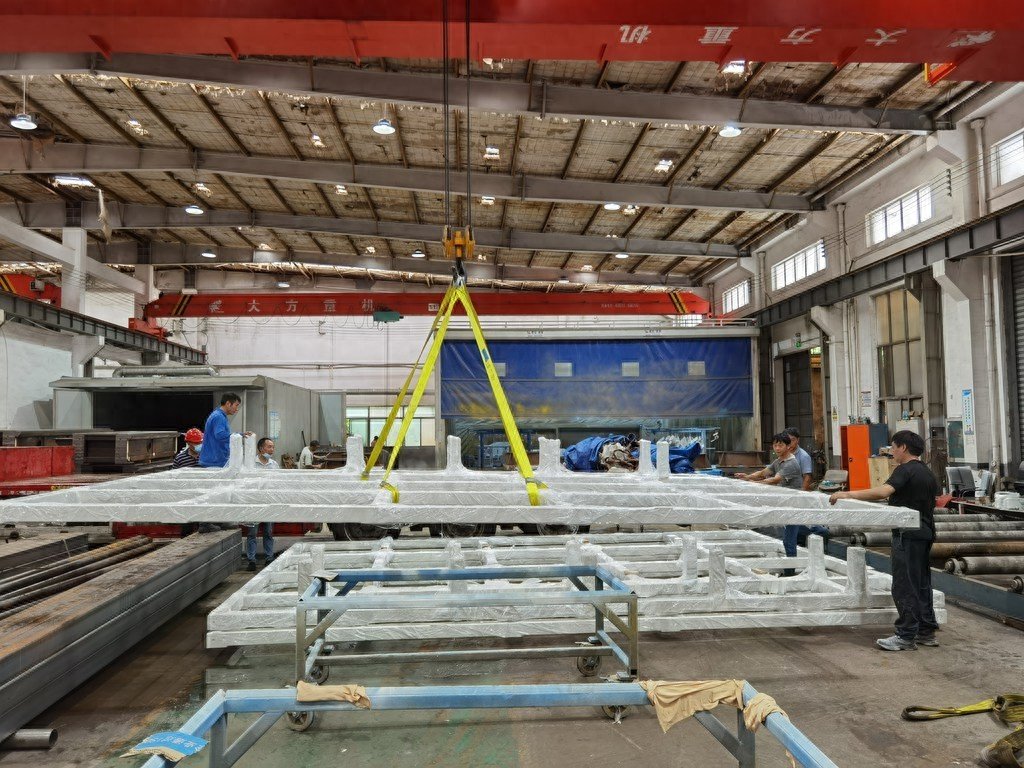
Fundamental assurance of welding quality and consistency![图片[1]-ロボット自動化リベット溶接加工による生産効率と一貫性の向上-大連富泓機械有限公司](https://jpdlfh.com/wp-content/uploads/2025/12/QQ20251230-190440.png)
Precise Reproduction of Parameters: The current, voltage, speed, angle and other parameters for each weld bead are strictly guaranteed by the programme, completely eliminating human variation.
Flawless execution of intricate paths: The robot's six-axis coordination capability achieves millimetre-level precision in perfectly following complex trajectories such as spatial curves and saddle welds. This represents an area where even skilled welders struggle to achieve consistent results.
Substantial reduction in overall costs
Direct labour costs: Significantly reducing reliance on highly skilled welders alleviates the challenges of staffing difficulties and escalating labour costs.
Hidden cost reductions: Lowering defective product rates (typically achievable reductions exceeding 60%), Reducing material wastage (through precise control of welding material filler quantities), Saving on training costs.
Improvements to the working environment and safety
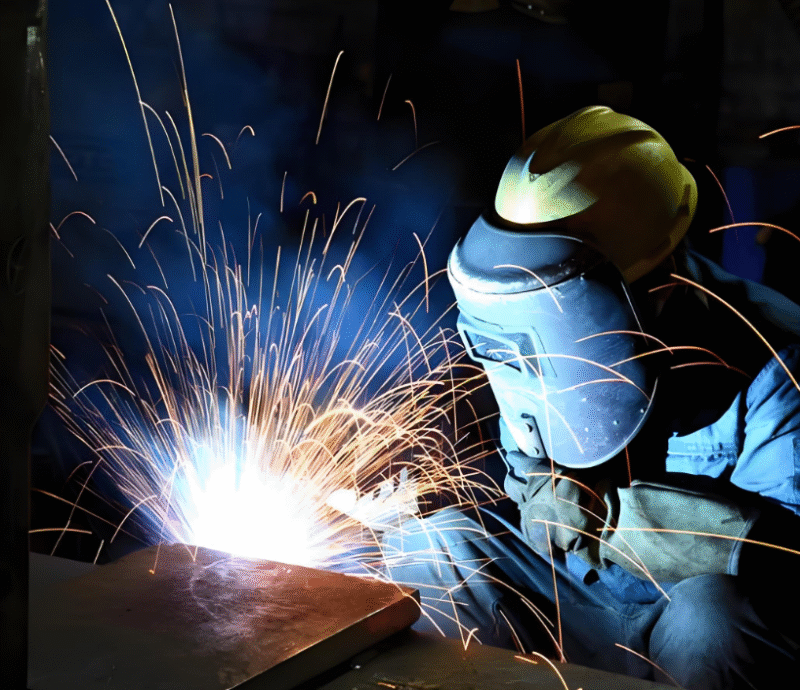
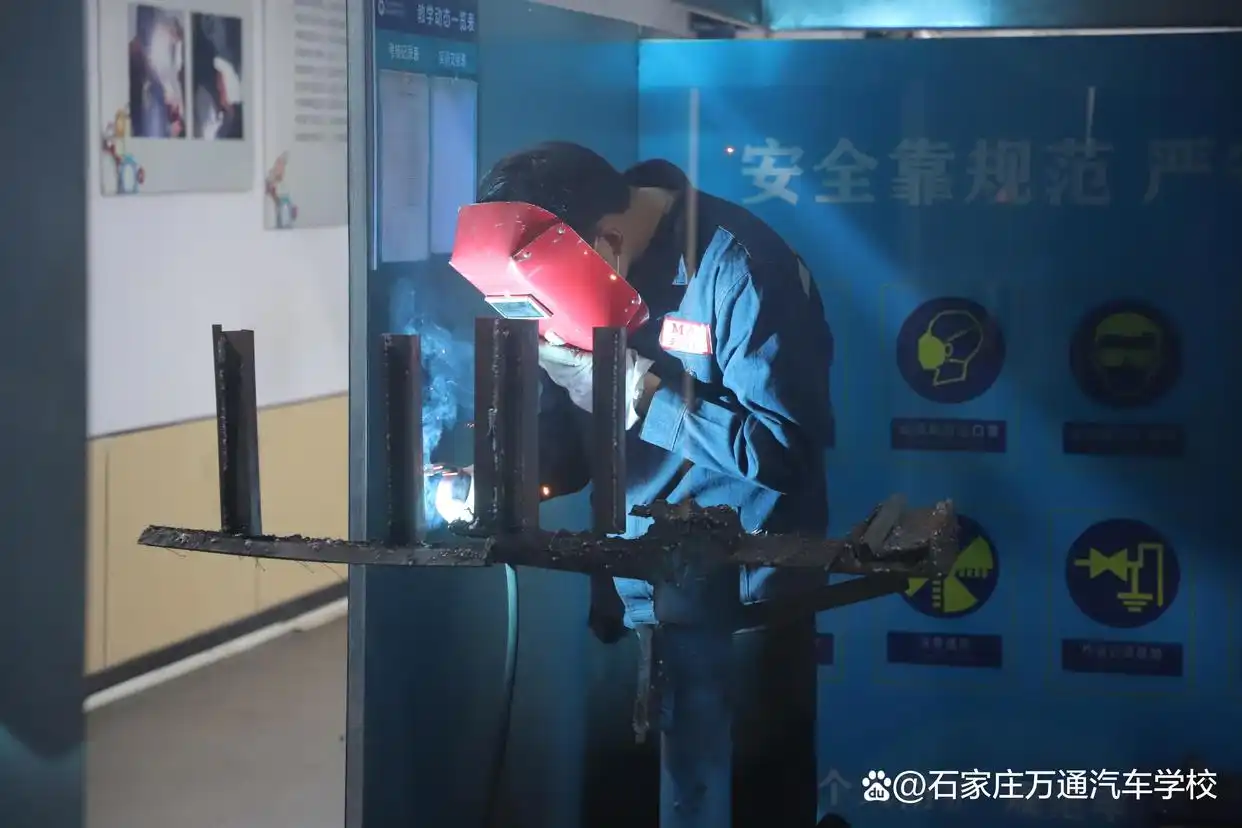
Freeing workers from harsh environments involving high temperatures, smoke, dust and intense light, transitioning them to programming, monitoring and maintenance duties.
Reduce occupational accident risks and comply with increasingly stringent occupational health and safety regulations.
Part Two: Core Technology Components of Robotic Automation Systems
Robot body and positioning device
Robot selection: Typically employs six-axis articulated arm robots (FANUC, ABB, KUKA, etc.), requiring sufficient load capacity to accommodate the welding torch and wire feeding system. For high-precision applications, hollow-arm robots may be selected to minimise interference with wiring harnesses.
Positioning device (positional): Functioning as the "seventh axis", it enables workpiece reversal at the optimal position. Single-axis, dual-axis, and head-tail frame positioners must be selected based on workpiece geometry and weld bead distribution.
Intelligent welding power source and sensor
Digital power supply: Equipped with waveform control and expert database functionality, enabling automatic adjustment of optimal parameters according to different materials and positions.
Weld Bead Tracking System:
Contact sensing (positioning): Compensates for workpiece assembly errors through TCP positioning and arc positioning.
Laser vision sensing: A technology that scans weld bead profiles in real time and adaptively adjusts the welding torch's orientation and path, serving as the core technology for addressing issues such as gaps and step-ups.
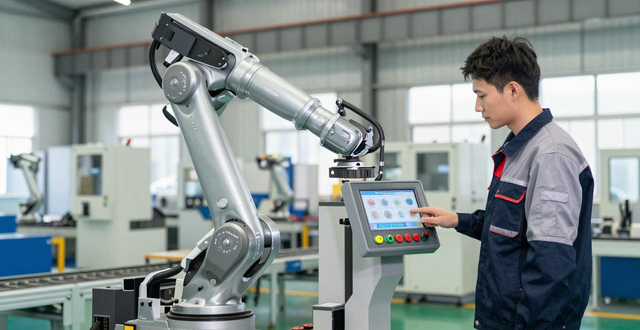
Software and Programming Systems![图片[2]-ロボット自動化リベット溶接加工による生産効率と一貫性の向上-大連富泓機械有限公司](https://jpdlfh.com/wp-content/uploads/2025/12/QQ20251230-185453-1.png)
Offline Programming (OLP) software: Enabling robot layout simulation, path planning, and cycle time analysis within virtual environments such as RobotStudio and MotoSim, significantly reducing on-site adjustment time.
Process Database: Integrates mature welding process packages (WPPs) to enable 'one-click calling'. This reduces the requirement for programmers to possess welding expertise.
Part Three: Implementation Pathways and Key Success Factors
Feasibility Analysis and Workpiece Selection
Characteristics of workpieces with high suitability: - Lot production or medium-lot production - Long, regular weld beads - Workpiece weight/size suitable for automated fixtures
Representative industrial applications: automotive body shells, excavator bucket arms, containers, longitudinal circumferential welds in wind turbine towers, aluminium alloy bicycle frames.
System Integration and Fixture Design
Selection of specialist integrators: The integrator's experience is more important than the robot brand, and it is necessary to evaluate the depth of industry case studies and technical understanding.
“Fixture design centred on the welding torch: The fixture must ensure high repeat positioning accuracy (±0.1mm) while also considering accessibility to the weld bead, workpiece deformation relief, and ease of slag removal.
Transformation of the Talent Team
Developing hybrid professionals in welding technology and robot programming.
Digitise the expertise of skilled welders and convert it into a library of robotic process parameters.
A phased implementation strategy
Begin with the automation of workstations (single welding workstations) and gain experience.
The automation of production lines will be progressively expanded to encompass multiple workstations and integrated logistics systems, with the ultimate objective being the establishment of flexible manufacturing cells (FMCs) or digital twin-driven smart factories.
Part IV: Future Development Trends and Challenges
The cutting edge of technological convergence
Collaborative robot (cobot) welding: By enabling human-machine collaboration, it is ideally suited for low-volume, high-mix production and lowers the barriers to automation.
Artificial Intelligence and Machine Learning: Through the collection of big data (arc sound, spectral data) during welding processes, AI algorithms perform real-time prediction and parameter adjustment to eliminate defects. This achieves a leap from 'adaptive' to 'self-learning' capabilities.
Remote operation through cloud-edge integration: consolidating welding data in the cloud to conduct comprehensive efficiency analysis and process optimisation. Alongside real-time edge-side control, this enables remote diagnostics and guidance by specialists utilising augmented reality technology.
Challenges Faced and Countermeasures
Barriers to initial investment: Adopting new models such as finance leases and production-based payments to reduce initial investment costs.
High demands on product design and consistency: Promoting the principles of DFM/A (Design for Manufacturing/Assembly) to establish the conditions for automation from the very outset of the design process.
Applicability to SMEs: Modularised, standardised, plug-and-play lightweight automation solutions are gaining prominence, supporting 'specialised start-ups'.
Judgement
Robotic automated rivet welding represents not merely a reduction in labour costs, but a systematic upgrade of the entire production system in terms of quality, efficiency, traceability, and flexibility. It is evolving from an 'option' to an 'essential requirement' in high-end manufacturing. Enterprises should establish a scientific plan based on their own products and production characteristics, implement it in stages, and actively embrace this technology-driven productivity revolution to secure a competitive edge in future market competition.
 Chinese
  Japanese
  English
  German
  Finnish
No comments