

On-site rivetingWelding and pipework installationspecial challenges in
The installation and repair of pipework frequently encounter challenges such as spatial constraints, complex environments, and tight deadlines, making rivet welding techniques on-site pivotal to resolving these issues. Unlike factory settings, field welding necessitates adapting to specialised conditions including fluctuating weather, variations in pipe materials, and heightened safety risks. This paper delves deeply into the core techniques and safety standards of field rivet welding, supporting construction teams in enhancing efficiency and achieving zero accidents.
Part One: Preparatory Work for Rivet Welding on Site
Environmental Assessment and Risk Management
Confirmation of work area: Verify that no flammable or explosive materials are present, and install fire-retardant sheets and fire extinguishers.
Weather Adaptability: Install windbreaks when wind speeds exceed 2 metres per second. Suspend operations during rainy or snowy weather.
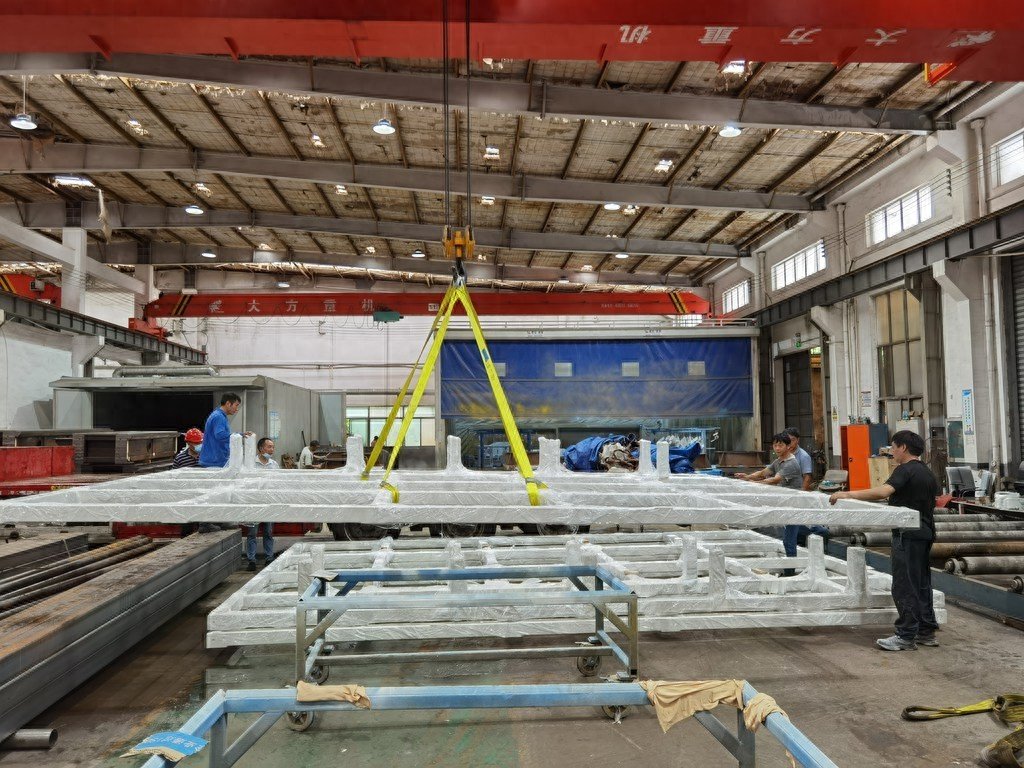
Pipeline Pre-processing Technology![图片[1]-配管設置・修理における現場リベット溶接加工技術と安全基準-大連富泓機械有限公司](https://jpdlfh.com/wp-content/uploads/2025/12/QQ20251230-185850-800x473.png)
Chamfering: Employ portable chamfering machines to ensure precision in both angle (typically 30–35°) and chamfer width (1–2mm).
Cleaning process: Remove oil stains and rust using acetone or a specialised cleaning agent. Stainless steel pipes must be protected from contamination by carbon steel.
Preparation of equipment and materials
A lightweight inverter welder (e.g., Miller Maxstar) shall be employed, equipped with a generator.
Welding material management: On site, use a welding rod insulation tube (maintaining 80–110°C) to prevent moisture absorption.
Part Two: Core Technologies of On-Site Welding
Welding strategies for different positions
Horizontal fixed pipe (5G position): To control deformation, the segmented welding method is employed, with each section's length not exceeding 30 times the diameter of the welding rod.
Vertical fixed pipe (2G position): Increase penetration depth through vertical welding and control interpass temperature below 150°C.
Inclined pipe (6G position): The most challenging position, requiring the use of oscillating welding technique to maintain a constant arc length.
Key Considerations for Welding Special Material Pipes
Carbon steel pipes: Dry low-hydrogen welding rods (350–400°C × 1 hour), prevent cracking through controlled cooling after welding.
Stainless steel pipe: employs argon gas shielding (flow rate 5-10 L/min) and low-current high-speed welding.
Alloy steel pipes: Strict preheating (in accordance with PQR requirements), stress relief through post-weld heat treatment.
Defect Prevention and Emergency Response
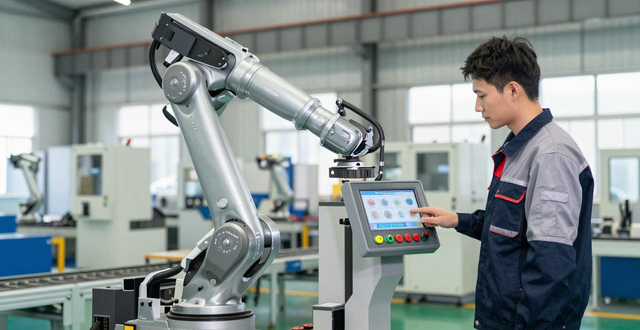
Prevention of pinholes: Ensure the purity of the protective gas and verify the integrity of the gas piping.![图片[2]-配管設置・修理における現場リベット溶接加工技術と安全基準-大連富泓機械有限公司](https://jpdlfh.com/wp-content/uploads/2025/12/QQ20251230-185831.png)
Treatment for poor fusion: After cleaning the root area with a carbon arc gas grinder, perform re-welding.
Deformation correction: Restore linearity using hydraulic compensators or flame correction methods.
Part Three: On-Site Safety Regulations and Standards
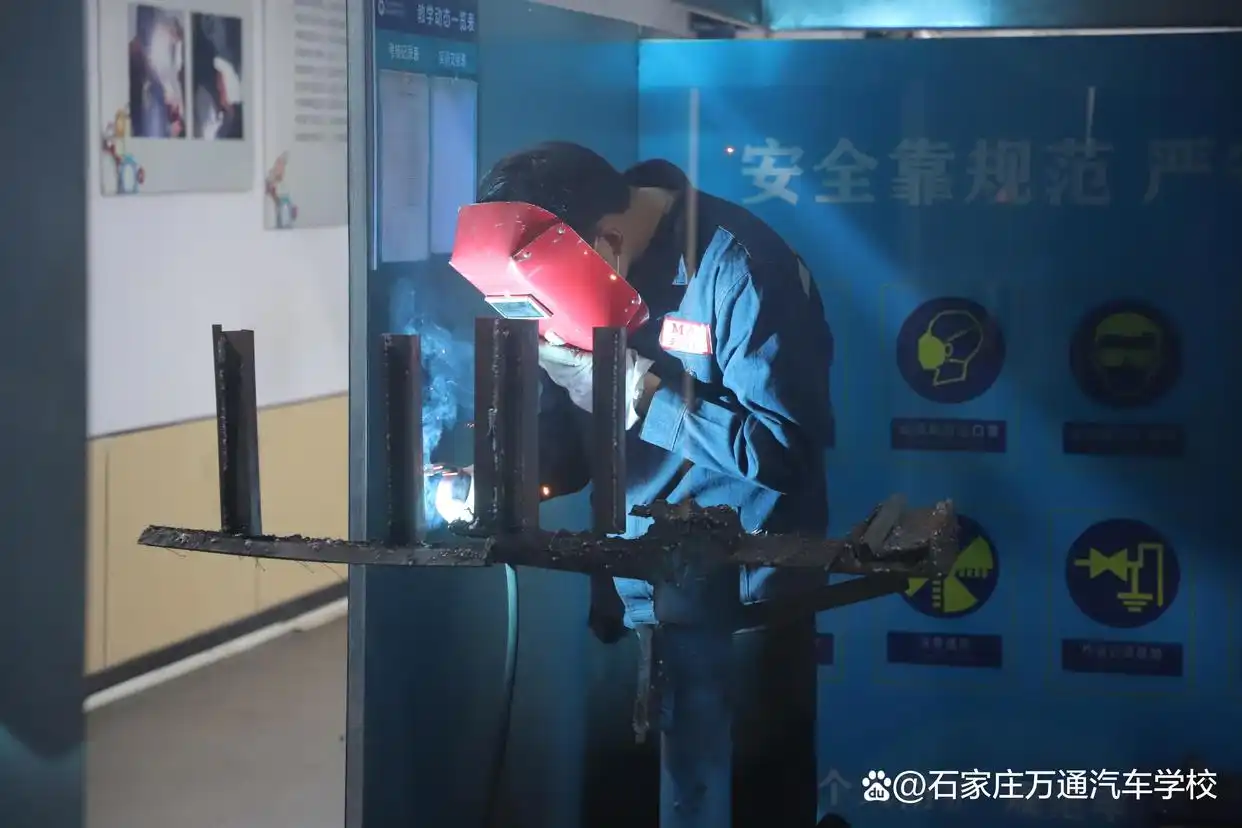
Personal Protective Equipment (PPE)
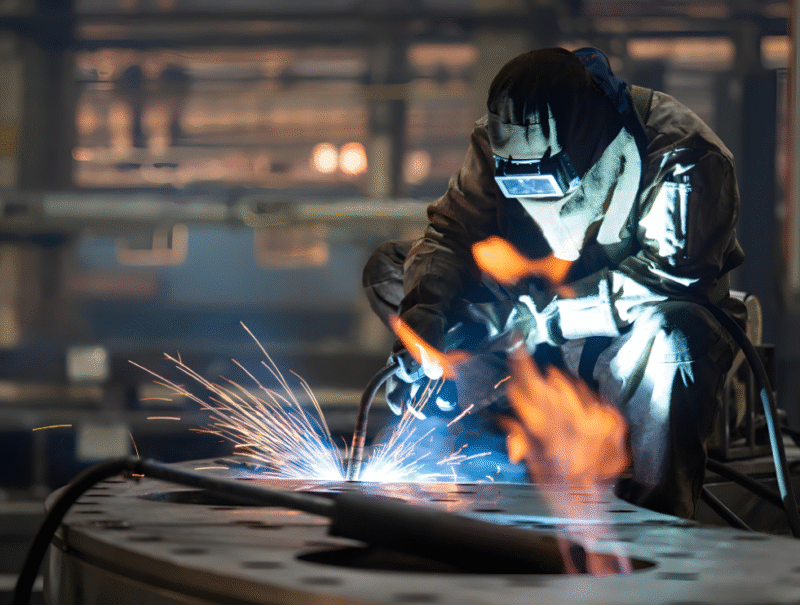
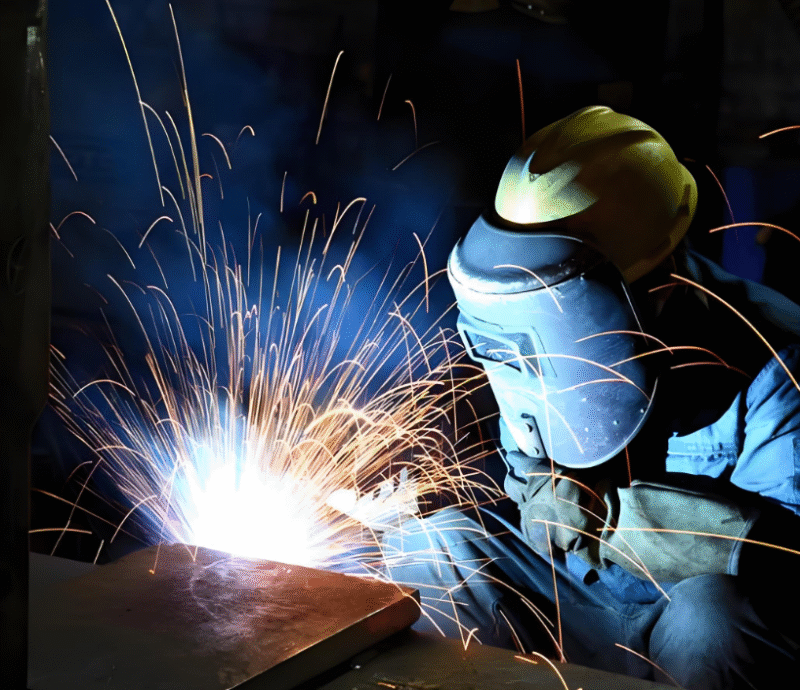
Welding face shields: We recommend the use of auto-darkening face shields (e.g., 3M Speedglas).
Protective clothing: flame-retardant workwear, insulated gloves, safety boots.
Respiratory protection: In confined spaces, use a powered air-purifying respirator (PAPR).
Work Permit and Guardianship System
Hot Work Permit: Specifies the duration of work, safety measures, and the designated supervisor.
Gas detection: Prior to commencing work, detect combustible gases (LEL < 10% by volume) and oxygen concentration (19.5–23.5% by volume).
Confined space operations: Mandatory ventilation, provision of escape routes, deployment of rescue equipment.
Protection of the Environment and Community
Noise control measures: Employ noise barriers and avoid night-time operations.
Waste Management: Welding slag and waste welding materials shall be collected separately as hazardous waste.
Part Four: Case Studies and Technological Innovation
Example: Emergency pipe repair at a chemical plant
Problem: A leak has occurred in the DN300 stainless steel pipe due to corrosion, necessitating pressure welding.
Solution: By adopting the Bell welding technique (perforated plug welding) and utilising Inconel 625 welding material, repairs were successfully completed without operational downtime.
Trends in Technological Innovation
Automated on-site welding: Enhanced consistency through track-mounted welding robots (e.g., Bug-O system).
Digital monitoring: Transmitting welding parameters in real time to the cloud via IoT sensors for analysis.
Environmental protection technology: Low-fume flux-cored arc welding wire (FCAW-G) reduces environmental pollution.
Judgement
On-site pipe welding represents the comprehensive embodiment of technical skill, experience and safety. By continuously updating technical knowledge, strictly adhering to safety regulations, and actively incorporating automated equipment and digital tools, the engineering team can efficiently and safely complete operations within complex environments.
 Chinese
  Japanese
  English
  German
  Finnish
No comments