

Rebett DissolvingApplications of Dissolution Technologies: Principles, Prospectus, Causality Structures
Dissolution is separated, continuity is bridged, and the realm of the manufacturing process is redefined.
Rebelt bonding and Handa bonding is a field in which the dissolution of a single material is more than a simple material separation process. In order to manage the quality of the joining process from the formation of alloys to the joining process, it is important to understand that dissolution behaviour is an important factor in optimising the joining process. This paper describes the principles of application, specific procedures, and practical examples of dissolution technology in the context of Rebate Dissolution.
Solubility: Basis for Material Dialogue on Rebett Solubilisation in Nantucket
Solubility and the ability of a substance to dissolve other substances are intrinsic to the substance -7. Rebuttal solubility is reflected in the definition of this term in two separate leagues:
Alloy Manufacturing Stage: HANDA alloys are made up of various elements which are dissolved and combined with each other in the formation of positively formed alloys. The metal precipitates are obtained by mixing/diffusing and solidifying the product-7.
HANDA PROSPECT STAGE: Solubility is dependent on the dispersion capacity of the alloy's metal overlay. The solubility/diffusion rate of the substrate is different from that of the HANDA alloy-7.
This is to understand that the optimisation of the Rebate Joint Prospectus is not possible. For example, the friction between the sheet side cellulose and panchineg friction Rebate Joint Prospectus is such that the friction between the Rebate and the material softens the heat of the bonding plate, and the mutual diffusion behaviour of the materials in the thermodynamic calibration of the plating and the Prospectus has a direct effect on the quality of the bonding part.
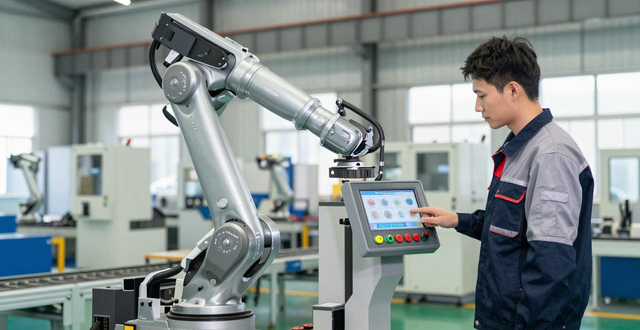
Thermal dissolution effect of rebate dissolution in the case of nondissolution![图片[1]-リベット溶接における溶解技術の応用:原理、プロセス、ケーススタディ-大連富泓機械有限公司](https://jpdlfh.com/wp-content/uploads/2025/06/QQ20250627-201220-1-800x605.png)
The high degree of Rebelt bonding programme is a close combination of heat transfer and dissolution behaviour. Shanghai Jiao Tong University has researched and developed a perforated friction relief bonding programme for Aluminium alloy sheets. The principle of the programme is to use semi-hollow reliefs with high speed turning to soften the bonded plate by heat generation from the friction between the reliefs and the material-3.
In this project, the dissolution characteristics of the materials are changed by heat, and the mutual dissolution of the materials is affected by heat transfer and the formation of joints. Under the parameter, the material between the upper plate and the lower plate of the joint is shown to form a metallic joint under the action of heat-3, and this is the same as the mutual dissolution of metals in the dissolved joints from the past.
Applications of Dissolution Prospecting for Pre-construction Treatment
Dissolution technology is an important part of the pre-treatment stage of joining. As an example of an efficient pump dissolution program applied in the Bohai Oilfield, the program is optimised to dissolve three stages of the dissolution program-4, and the dissolution time of the dry powder of the pump is about 40 minutes, and the efficiency of the joining program after the program is greatly improved.
The same principle is used for metal joining pretreatment. The specific dissolution technology removes the acidified layer and contaminated material from the metal surface, which results in a favourable surface condition for subsequent rebonding.
Practical Example: Optimisation of Rebate Bonding by Dissolution Technology
Causes1:Car lightweight connector
In lightweight manufacturing of automobiles, SPR is widely used for Aluminium-Aluminium bonding and Aluminium-Steel bonding-8 This procedure has a direct impact on the understanding of the dissolution behaviour of the coated metal and the selection of the bonding parameter. For example, it is necessary to consider the mutual dissolution characteristics of sub-lead and alminium at high temperatures in the joining of sub-leaded steel sheets and alminium alloys in order to avoid the formation of brittle phases.
Causes 2: Plastic & Metal Composite Joints
Dissolution technology has shown its unique value in the joining of composite structures of plastics and metals. For example, the polyschline dissolution programme utilises solvent dissolution to dissolve, heat, degas, extrude, and petrify the polyschline petroleum products.9 The following are some examples of the techniques used to dissolve, heat, degas, extrude, and petrify polyschline petroleum products.
Optimisation of Prospectus: Selection of Parameters Based on Behaviour of Dissolving Actions
The optimisation of material dissolution behaviour based on parameterisation is extremely important for the development of Rebent Friction Bonding Prospectus. For example, in the study of friction Rebent dissolution proxies for sheet-side cellulose parchment at Shanghai Jiao Tong University, the optimisation of 2-stage proxies by a direct-crossing experimental scheme, the evaluation indexes of joint geometry and mechanical properties have been shown to have been used as experimental indicators and the optimum 2-stage proxies were selected for the final-3.
The same type of appliance can be used for other forms of vibration bonding. By analysing the dissolution behaviour of the materials in the heat and force field of the joint, the quality of the joint and the stability of the plastics can be improved by making a correct decision.
Conclusion
Dissolution TechnologyRebett DissolvingThe convergence of the two approaches implies that the integration of materials science into the international community of science and technology in the manufacturing industry is based on the classification of existing materials and the classification of the products. The deep understanding of the behaviour of dissolution is the scientific basis for the development of next-generation joining technology, which is based on the optimisation of existing joining processes. The integration of these technologies is an important strategy to win the competition in the manufacturing industry through the optimisation of technological innovations and processes.
 Chinese
  Japanese
  English
  German
  Finnish
No comments